
Minoxidil vs. Finasteride: Costs, Side Effects, and What Works Best
If you've been looking into hair loss medications, you've almost certainly come across minoxidil and finasteride. They're two of the most widely used and most thoroughly researched treatments available, and they work in completely different ways.
Understanding the difference between them, and knowing when to use one, the other, or both, can make a real difference in your results. Let's break it down in plain terms.
How They Work
Minoxidil improves blood flow to the scalp and prolongs the growth phase of the hair cycle. It was originally developed as a blood pressure medication, and its hair-growing effect was discovered somewhat by accident before it became one of the most commonly recommended hair loss treatments in the world. It's available in both topical and oral forms.
Its effectiveness is well documented: a 1-year observational study of 984 men with male-pattern hair loss found that hairs lost during washing dropped from a mean of 69.7 at the start of the study to a mean of 33.8 by the end, supporting minoxidil's effectiveness in slowing hair loss. More recently, a 2024 systematic review and meta-analysis of oral minoxidil covering 2,933 patients across 27 studies found that 35% experienced significant symptom improvement and 47% showed symptom improvement, particularly at doses above 1 mg. Comparative research has also shown that even low-dose oral minoxidil can rival the topical solution — one randomized controlled trial found that 1 mg daily oral minoxidil was as effective as the standard 5% topical solution in improving mean hair diameter, though photographic assessment showed slightly better density results with the topical version. ISHRS + 2
Finasteride works differently. It blocks the enzyme (5-alpha reductase) that converts testosterone into DHT (dihydrotestosterone), which is the hormone most responsible for shrinking hair follicles in people with androgenetic alopecia. By lowering DHT levels, finasteride helps protect existing follicles and, in many cases, allows miniaturized follicles to gradually recover.
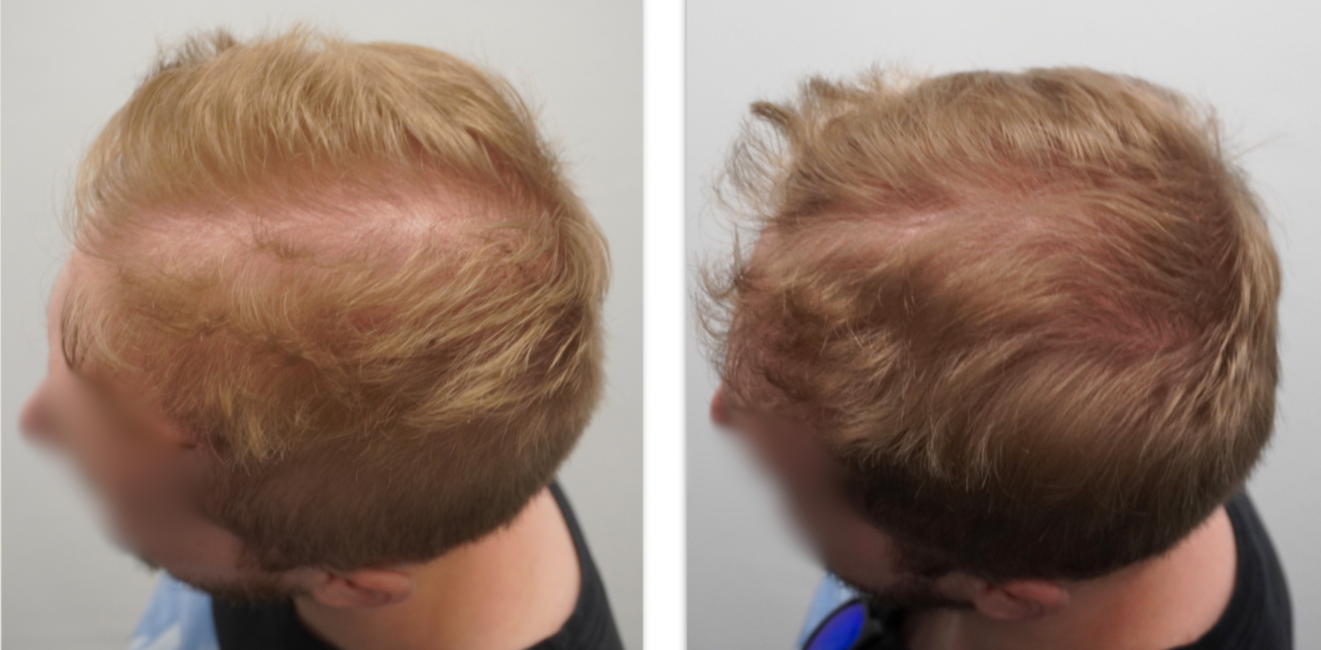
1 Year Transformation - Hair Loss Patient who used Medical-Grade Laser Therapy & Minoxidil
Who Are They For?
Both medications are primarily used for androgenetic alopecia, the most common type of hair loss driven by genetics and hormones. This includes male pattern hair loss and, in some cases, female pattern hair loss.
Minoxidil is approved for both men and women. Topical minoxidil is available over the counter, while oral minoxidil requires a prescription.
Finasteride is primarily prescribed for men. It is used off-label in some post-menopausal women with female pattern hair loss, but it is not appropriate for women who are pregnant or may become pregnant due to risks associated with fetal development.
Side Effects: What to Know
Minoxidil side effects are generally mild and may include:
A temporary increase in shedding in the first few weeks (this is actually a sign the treatment is working, not a sign to stop)
Scalp dryness or irritation with topical forms
In rare cases, unwanted facial hair growth with topical application
With oral minoxidil: fluid retention, low blood pressure, or increased body hair in a small number of people
Finasteride side effects are less common than many people fear, but they're worth understanding:
Sexual side effects such as decreased libido or erectile dysfunction are reported in a small percentage of men, typically under 4%
Mood changes in rare cases
Side effects typically resolve when the medication is stopped
Many people are anxious about finasteride before starting it and find that their experience is nothing like what they feared. That said, having an honest conversation with your clinician before starting is always the right move.
How Much Do They Cost?
This is one of the most common questions we hear, and the good news is that both medications are relatively affordable. Generic oral minoxidil typically runs $20 to $50 per month. Generic finasteride is usually $10 to $30 per month.
When prescribed through a hair loss clinic, pricing can vary depending on the protocol, but it's often competitive with pharmacy pricing and comes with the added benefit of clinical oversight. At NHLMA, we offer oral prescriptions for both medications as part of a clinician-supervised hair restoration protocol, which means you're getting the right dosage, the right guidance, and a team that's monitoring your progress.
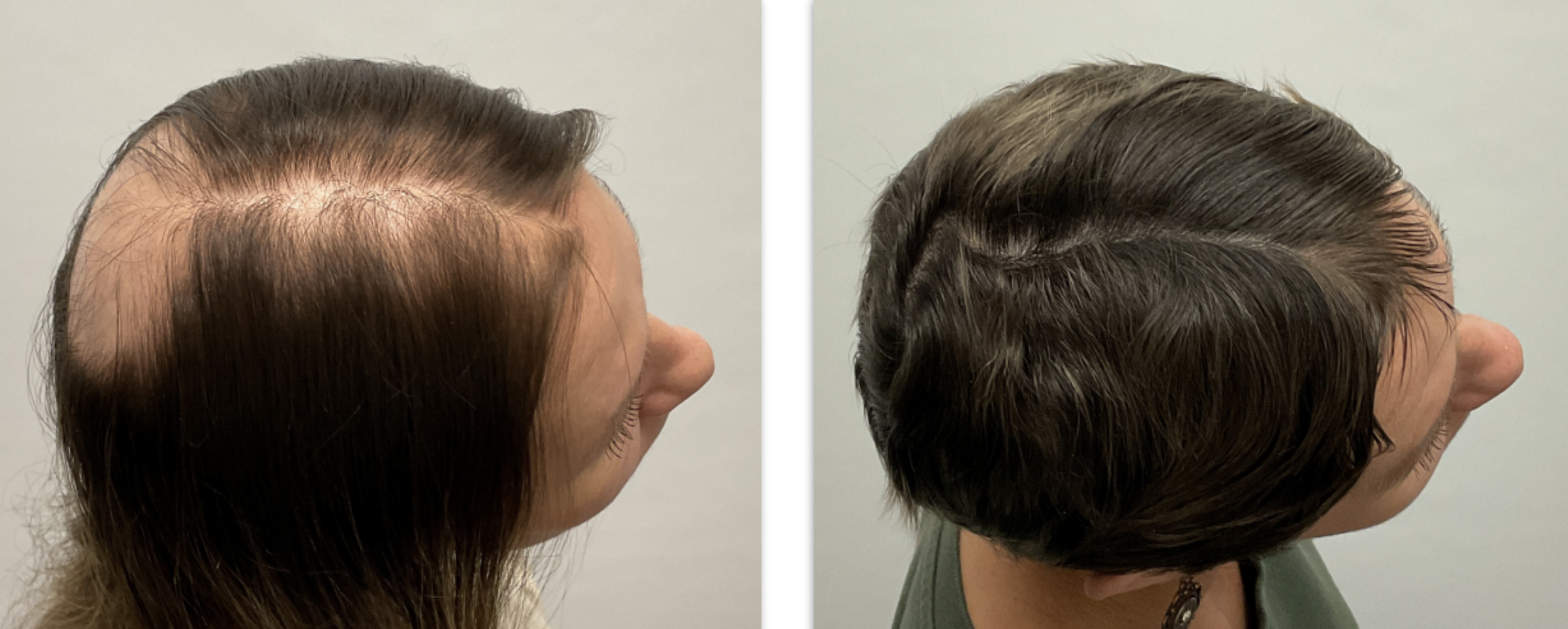
6 Month Transformation - Hair Loss Patient who used Exosomes & Minoxidil
Should You Use Both?
For many people with androgenetic alopecia, combining minoxidil and finasteride produces better results than either medication alone. Minoxidil stimulates growth while finasteride addresses the underlying hormonal driver of loss. Together, they work on two fronts simultaneously, and clinical data supports the combination approach.
Whether that's the right plan for you depends on your hair loss type, health history, and goals, which is exactly why a personalized consultation matters so much.
Frequently Asked Questions
How long does it take for minoxidil to work?
Most people see a reduction in shedding within two to three months, with visible regrowth appearing around four to six months. Full results typically take about 12 months of consistent use.
How long does finasteride take to work?
Finasteride works gradually. It can take three to six months to notice reduced shedding, and up to 12 months to see meaningful regrowth. Consistency is essential, stopping and starting doesn't produce good outcomes.
Do you have to take these medications forever?
For most people, yes. Stopping treatment typically leads to a gradual return of hair loss within several months. These medications manage hair loss rather than cure it, so ongoing use is part of the plan.
Is oral minoxidil better than topical?
Oral minoxidil offers more consistent absorption and may be better tolerated by people who experience scalp irritation from topical application. It's also simpler to incorporate into a daily routine. Your clinician can help determine which form makes the most sense for you.
Can women take finasteride?
Finasteride is used off-label in some post-menopausal women with female pattern hair loss, but it is not safe for women who are or may become pregnant. A thorough clinician evaluation is essential before considering this option.
What is the difference between getting a prescription from a hair loss clinic vs. an online service?
A hair loss clinic provides a proper evaluation, monitors your response to treatment over time, and can adjust your protocol based on how you're doing. Online prescription services are convenient, but they don't always provide the clinical oversight that leads to the best long-term outcomes

Written by the Hair Loss Experts at NHLMA
Founded in 2007, National Hair Loss Medical Aesthetics is the leading Scottsdale-based practice specializing in the science of hair restoration and scalp health.
Our team of clinicians combines functional medicine, advanced diagnostics, and the latest regenerative treatments to address hair loss at its root cause. Through a clinical, evidence-based lens, not guesswork or one-size-fits-all solutions. We are not just writing about this. It is what we do every day.