
The Best Nutrients for Hair Growth: What to Eat and What to Supplement
When people come to us about hair loss, most are thinking about hair restoration treatments, products, and procedures. And those things absolutely matter. But one of the most overlooked and most fixable contributors to hair loss is what's happening on your plate and in your bloodwork.
Your hair follicles are among the most metabolically active cells in your body. They need a steady, consistent supply of the right nutrients to produce hair properly. When those nutrients are missing, even great treatment protocols can fall short. The good news is that nutritional deficiencies are identifiable and addressable, and correcting them can make a meaningful difference in your hair, your skin, and how you feel overall.
Here's what your hair actually needs:
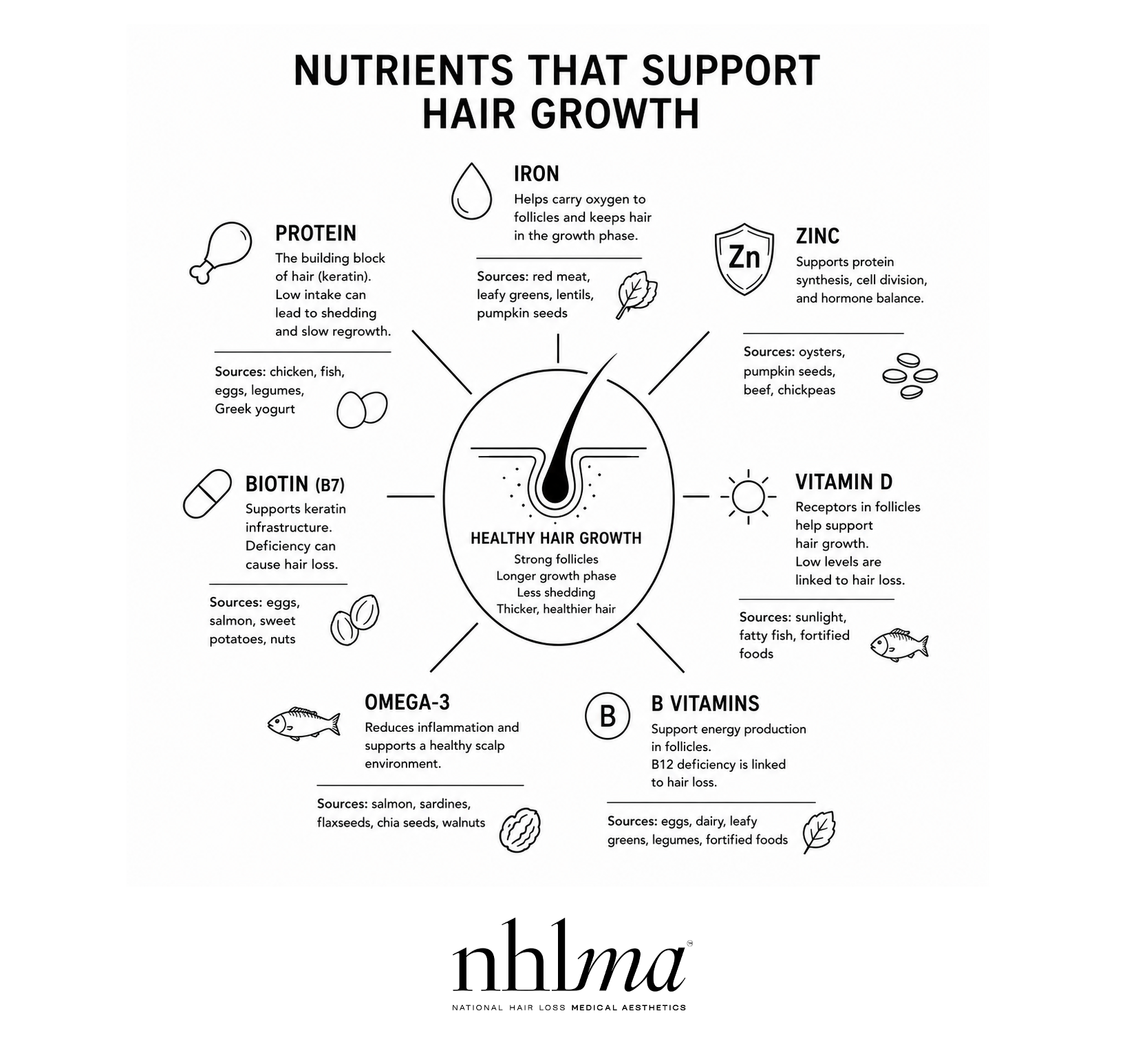
Protein: The Building Block Your Hair Can't Do Without
Hair is made almost entirely of keratin, a type of protein. If you're not eating enough protein, your body will deprioritize hair growth to protect more essential functions. The result is diffuse shedding and slower regrowth.
Most adults need between 0.7 and 1 gram of protein per pound of body weight per day, and many people, particularly those who eat plant-forward diets or restrict calories, fall short without realizing it. Eggs, fish, chicken, legumes, and Greek yogurt are all strong, accessible sources.
Shop our favorite source of protein here, Body Health Perfect Amino Tablets!
Iron: The Most Commonly Missed Deficiency
Iron deficiency is one of the most prevalent and underdiagnosed causes of hair loss, particularly in women. It affects the hair growth cycle directly, pushing follicles out of their active growth phase prematurely.
The tricky part is that standard iron panels often miss the problem. Ferritin, the protein that stores iron in the body, is the more relevant marker for hair loss, and it's frequently left off routine lab orders. If you're shedding excessively and also feel fatigued or foggy, requesting a ferritin test specifically is worth doing.
Red meat, leafy greens, lentils, and pumpkin seeds are good dietary sources. Pairing iron-rich foods with vitamin C significantly improves absorption.
We cover the iron and hair loss connection in depth in a dedicated post if you want to go deeper on this one.
Zinc: Quiet but Critical
Zinc plays a key role in protein synthesis and cell division, two processes that are essential for healthy hair growth. It also helps regulate androgen production, which matters because elevated androgens are a primary driver of pattern hair loss.
Zinc deficiency can cause hair thinning, a dry or flaky scalp, and slow healing. Oysters, pumpkin seeds, beef, and chickpeas are among the best dietary sources. Because zinc and iron compete for absorption, taking them as separate supplements at different times of day is worth knowing.
Biotin: The Most Talked About, the Most Misunderstood
Biotin (vitamin B7) is one of the most heavily marketed nutrients for hair growth, and the reason is legitimate, a true biotin deficiency does cause hair loss. But true deficiency is actually uncommon in people who eat a reasonably varied diet.
For most people with adequate biotin levels, supplementing more won't produce the dramatic results the packaging suggests. If you are deficient, though, correcting it can make a real difference. Eggs, salmon, sweet potatoes, and nuts are reliable sources. If you're taking a biotin supplement, it's worth flagging to your doctor before any lab work, as high biotin levels can interfere with certain thyroid and hormone test results.
Vitamin D: Far More Important Than Most People Realize
Vitamin D receptors are found directly on hair follicles, and low vitamin D levels are meaningfully associated with hair loss, particularly in women. It's also one of the most common deficiencies in the general population, especially for people who spend most of their time indoors.
If you haven't had your vitamin D levels tested recently, it's worth adding to your next panel. Supplementation is simple and can have a genuine impact on hair growth over time. We've written a dedicated post on the vitamin D and hair loss connection for anyone who wants the full picture. Shop our go-to Vitamin D3 supplements here!
Omega-3 Fatty Acids: For the Scalp Environment You Can't See
Omega-3 fatty acids support scalp health by reducing inflammation and maintaining the skin barrier that your follicles depend on. A dry, inflamed scalp is not a hospitable environment for healthy hair growth, and chronic scalp inflammation is an underappreciated contributor to shedding.
Fatty fish such as salmon, sardines, and mackerel are the best sources. Flaxseeds, chia seeds, and walnuts provide plant-based omega-3s. For people who don't eat much fish, an algae-based omega-3 supplement is a well-absorbed alternative.
B Vitamins: The Energy Your Follicles Run On
The B vitamin family, particularly B12, folate, and niacin, supports the energy production that hair follicles depend on to function. B12 deficiency is especially common among people who eat primarily plant-based diets, since B12 is found almost exclusively in animal products. Hair loss, persistent fatigue, and neurological changes are all potential signs.
If you've been plant-based for a while and haven't checked your B12 recently, adding it to your next lab panel is a good idea. Shop our favorite B12 supplements here!

Why Lab Testing Matters More Than Guessing
Here's what we see consistently at NHLMA: people who are eating well and doing many things right are still deficient in one or more key nutrients. That's because deficiency isn't always about diet alone. Absorption issues, gut health, medication interactions, and genetic factors can all interfere with how well your body uses what you're putting in.
This is why we incorporate comprehensive lab testing into our hair loss protocols. These tests include blood labs, genetic saliva testing, hair follicle testing and more. Knowing exactly what's missing allows us to target supplementation and dietary changes precisely, rather than recommending a handful of supplements and hoping one of them helps.
Frequently Asked Questions
What is the most important nutrient for hair growth?
There's no single most important nutrient — hair growth depends on many working together. That said, iron (specifically ferritin), protein, zinc, and vitamin D are the deficiencies we most commonly identify in clients experiencing hair loss.
Can changing my diet actually stop hair loss?
If nutritional deficiency is a contributing factor, which it is for a significant number of people, then correcting those deficiencies can meaningfully reduce shedding and support regrowth. It rarely works in complete isolation, but it's an important and often underutilized piece of a comprehensive hair restoration plan.
How do I know if I'm deficient in something?
Lab testing is the most reliable way to know. At NHLMA, we include a comprehensive nutritional and hormonal lab review as part of our evaluation process, which gives us a clear picture of what's actually going on rather than relying on guesswork or symptom alone.
Should I take hair growth supplements?
Some supplements genuinely help, especially if you have a confirmed deficiency. But many over-the-counter hair supplement blends contain nutrients in forms or amounts that aren't particularly well-absorbed. We recommend knowing what you're actually deficient in before adding supplements, so you're addressing a real need.
Does nutrition affect skin health the same way it affects hair?
Yes, and significantly. Many of the same nutrients that support hair growth — zinc, omega-3s, vitamin C, biotin, and B vitamins — play an equally important role in skin barrier function, hydration, and clarity. Taking care of your nutritional foundation benefits both.
How does NHLMA approach nutrition as part of hair loss treatment?
We include a nutritional review and comprehensive lab analysis as part of our clinical evaluation. For clients who want a more complete picture of what's driving their hair loss from the inside out, we also offer customized supplement and dietary guidance as part of the program.

Written by the Hair Loss and Skin Experts at NHLMA
Founded in 2007, National Hair Loss Medical Aesthetics is the leading Scottsdale-based practice specializing in the science of hair restoration and medical aesthetics.
At NHLMA in Scottsdale, our clinicians don't guess. They diagnose. Using functional medicine, advanced diagnostics, and the latest regenerative treatments, our team identifies what your skin actually needs. Then builds a protocol around it. This is what we do every day.