
Topical Melatonin for Hair Loss: How It Works and What to Expect
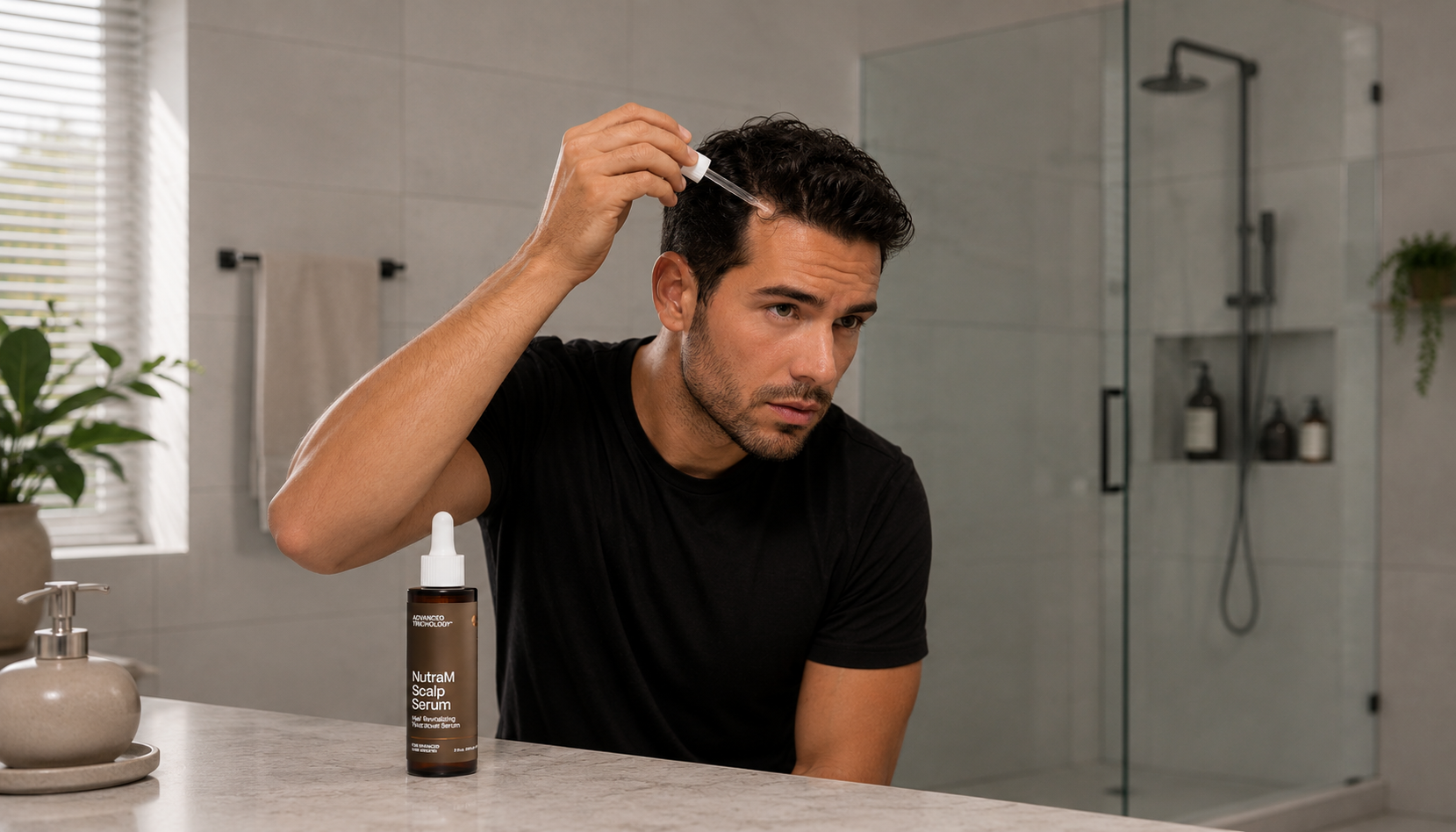
If you have been researching topical melatonin for hair loss, you are in good company. It is one of the most searched topics in non-hormonal hair restoration right now, and for good reason. The research is more substantive than most people expect, and it is increasingly showing up in clinical protocols alongside treatments like minoxidil, PRP, and exosomes.
We want to give you an honest picture of what topical melatonin actually does, what the science says, and how we think about it at NHLMA. Not hype. Not oversimplification. Just a clear explanation of a genuinely interesting molecule and where it fits in a hair restoration plan.
What Is Melatonin, and Why Are People Putting It on Their Scalp?
Most people know melatonin as the sleep hormone. Your brain produces it when it gets dark, and it helps regulate your internal clock. But melatonin does a lot more than help you fall asleep.
It is also produced locally throughout the body, including in the skin and scalp, andresearch has confirmed that hair follicles have their own melatonin receptors. That means your follicles are not just passively exposed to melatonin circulating in your blood. They are actively using it. That is what makes applying it directly to the scalp a scientifically grounded idea rather than a wellness trend.
When you apply melatonin topically, it works where hair loss actually happens: at the follicle. This is also why oral melatonin supplements do not do the same thing. Taking a pill at night affects your sleep cycle, not your scalp.
Curious whether this is the right approach for what you're experiencing?
Book a free consultation and we'll look at what's actually driving your hair loss before recommending anything.
What Does It Actually Do for Hair?
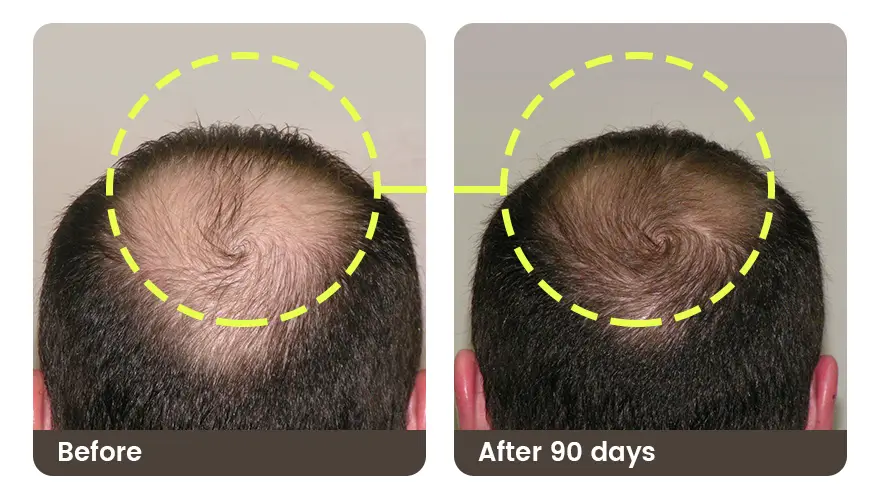
“I bought the products out of desperation, but they exceeded my expectations. My hair is thicker, my scalp feels better, and my confidence is up.”
Male Before and After using NutraM, From Advanced Trichology
Here is the simple version: hair follicles cycle through phases of growing, resting, and shedding. When follicles spend too much time resting and not enough time actively growing, hair gets thinner and falls out faster than it grows back. That pattern is behind most types of hair loss, including the most common form, androgenetic alopecia.
Topical melatonin has been shown to extend the active growing phase of the follicle, which means more of your hair is in growth mode at any given time.
A 2004 randomized controlled trial tested this directly in women with androgenetic alopecia and diffuse hair loss. After 90 days of applying a topical melatonin solution, the group using melatonin had a significantly higher percentage of follicles in the active growth phase compared to the placebo group. That is a meaningful, measurable change in follicle behavior.
Melatonin is also one of the most powerful antioxidants the body naturally produces. Oxidative stress at the scalp level is a known driver of follicle damage and miniaturization over time, and melatonin helps neutralize that damage. Think of it as a protective layer for the environment your hair grows in.
What Does the Larger Research Say?
The most comprehensive review of topical melatonin for hair loss was published in the International Journal of Trichology in 2012. It pulled together five separate clinical studies, including a large multi-center trial with more than 1,800 participants across 200 clinics in Germany, Poland, and Russia.
The results were consistent across all five studies. In the large multicenter trial specifically, the percentage of participants failing a hair pull test dropped from 61.6% to just 7.8% after three months of daily topical melatonin. The percentage passing the test (meaning minimal shedding) went from 12.2% to 61.5%. The researchers also noted improvements in scalp health, including reduced seborrhea.
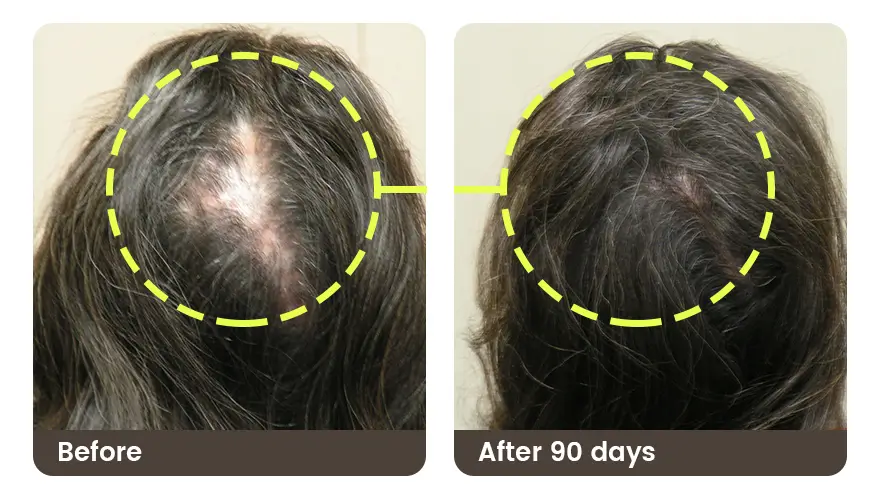
“I was skeptical because I’d tried so many things, but this is the first routine that made a visible difference. My hair looks fuller and feels healthier than it has in years.”
Female Before and After using NutraM, From Advanced Trichology
That is a large study, and the results held across different populations and climates. The safety profile across all studies was excellent. No significant side effects. No impact on blood melatonin levels when applied to the scalp.
The honest summary: the evidence is stronger than most people realize, and it is good enough that we consider this a legitimate clinical tool, not just a supplement people are asking about.
How We Use It at NHLMA
At NHLMA, topical melatonin is part of how we approach hair loss from the ground up. We do not recommend it as a standalone fix, and it is not a substitute for understanding why your hair is thinning in the first place. But as a daily at-home treatment within a broader plan, it consistently plays a supportive role.
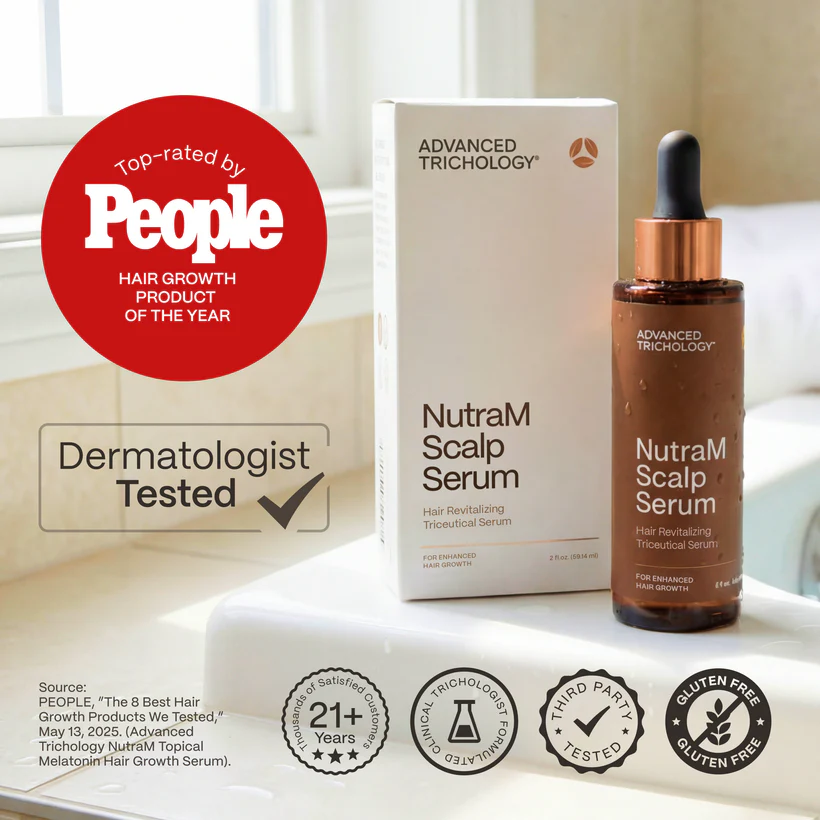
We carry the NutraM Melatonin Topical Hair Growth Serum because it delivers melatonin in a lightweight, non-greasy formula that absorbs easily and works for all hair types. In a consumer survey of 128 users, 83% noticed hair regrowth and 85% noticed reduced shedding with consistent daily use.
For patients in active treatment with us, topical melatonin pairs well with clinical therapies like PRF, exosomes, and our methylene blue protocols. Each addresses a different piece of the biology behind hair loss, and melatonin fills a specific role in keeping the growth cycle active between sessions.

Not sure whether melatonin alone is enough for what you're dealing with?
Book a free consultation and we'll map out what actually fits your case.
Who Is This Right For?
Topical melatonin is one of the more broadly applicable tools in hair restoration because it works through pathways that are relevant across many different causes of hair loss. It is worth considering if you are dealing with androgenetic alopecia, diffuse thinning, stress-related shedding, or hair loss that has worsened with age.
It is not a replacement for addressing hormonal imbalances, nutritional deficiencies, or other root causes. And if you have significant or long-standing hair loss, daily topical melatonin on its own is unlikely to reverse it without additional clinical support.
The best starting point for most people is consistent daily use of a topical melatonin serum while also getting clarity on what is actually driving their hair loss. That combination of at-home support and clinical understanding is what produces the most lasting results.
Frequently Asked Questions
Is topical melatonin the same as taking a melatonin supplement?
No. Oral melatonin affects your sleep cycle and does not deliver meaningful amounts to the scalp. Topical melatonin is applied directly to the scalp and works locally at the follicle. Completely different mechanism.
Will it make me sleepy?
No. When applied to the scalp, the melatonin stays local and does not enter your bloodstream in amounts that affect alertness. You can use it in the morning with no sedating effect.
How long until I see results?
Research shows measurable changes in anagen hair density after 90 days of consistent use. For visible improvements in thickness and shedding, three to six months is realistic. Hair biology is slow, and consistency matters more than anything else.
Can I use it with minoxidil or other treatments?
Generally yes. We regularly incorporate topical melatonin alongside other clinical treatments at NHLMA. If you are combining it with something specific, your provider can help you sequence it properly.
Where can I buy topical melatonin for hair?
We carry the bestselling NutraM Melatonin Topical Hair Growth Serum directly in our shop. No prescription needed and formulated specifically for scalp application.
Is it safe for sensitive scalps?
Yes. The NutraM formula includes soothing ingredients like licorice root and green tea extract that are well-tolerated by most scalp types. If your scalp tends to be reactive, start with every other day and build up from there.
The Bottom Line & Your Next Steps
Topical melatonin has more research behind it than most people realize, and it is one of the few non-prescription options with real clinical support. It works by keeping more of your hair in the active growth phase, protecting the scalp from oxidative damage, and creating a healthier environment for your follicles to do their job.
It is not a miracle treatment. But used consistently as part of a thoughtful approach to hair loss, it is genuinely worth adding.
YOUR NEXT STEPS
Want a personalized plan? Book a free consultation with one of our specialists to find out how topical melatonin fits with everything else that could help your specific hair loss.
Ready to start at home? Shop our best-selling melatonin serum.
Related reading: How Often Should You Use Red Light Therapy · Best Shampoos for Scalp Health

Written by the Hair Loss Experts at NHLMA
Founded in 2007, National Hair Loss Medical Aesthetics is the leading Scottsdale-based practice specializing in the science of hair restoration and scalp health.
Our team of clinicians combines functional medicine, advanced diagnostics, and the latest regenerative treatments to address hair loss at its root cause. Through a clinical, evidence-based lens, not guesswork or one-size-fits-all solutions. We are not just writing about this. It is what we do every day.