
Can Allergy Medication Cause Hair Loss? What to Know
If you take a daily antihistamine and you have been noticing more shedding than usual, you are probably wondering if the two are connected. It is one of the most common questions we get, and the honest answer is more nuanced than most sources let on.
Here is what we actually know.

Antihistamines and Hair Loss: The Short Answer
For most people, common over-the-counter antihistamines like Zyrtec, Claritin, and Allegra are unlikely to be the primary driver of hair loss. Hair loss is almost never caused by a single thing, and the relationship between allergy medications and the hair cycle is more complicated than a simple cause and effect.
That said, the question is worth taking seriously. Histamine receptors exist in hair follicles, which means histamine does play a role in the hair growth cycle. Blocking histamine systemically through medication is not a neutral act when it comes to follicle biology. And for some people, certain antihistamines do appear to contribute to shedding, whether directly or by affecting the scalp environment.
What we want to do is give you an honest breakdown by medication so you can have a more informed conversation with your provider.
Zyrtec (Cetirizine) and Hair Loss
Zyrtec is one of the most commonly searched antihistamines in relation to hair loss, and there is a reason for that: it generates more patient reports of hair shedding than most second-generation antihistamines.
The clinical evidence is limited and does not establish a clear causal link. What research does show is that cetirizine interacts with H1 receptors present in hair follicles, and that this interaction may affect the hair growth cycle in ways we do not yet fully understand. A 2007 study found that cetirizine inhibited a compound called PGD2, which is associated with hair follicle miniaturization, suggesting the drug may actually have some protective properties in certain contexts.
The picture is genuinely mixed. If you are taking Zyrtec daily and noticing increased shedding, it is worth discussing with a specialist rather than assuming correlation equals causation. If you want a more in-depth look, read our full guide on Zyrtec and Hair Loss.
Claritin (Loratadine) and Hair Loss
Claritin has a very low side effect profile compared to most antihistamines and is generally not associated with hair loss in clinical literature. Patient-reported cases of shedding with loratadine exist, but they are rare and not well-supported by research.
If you are taking Claritin and experiencing hair loss, it is more likely that the underlying allergic condition, or something else entirely, is driving the shedding rather than the medication itself.
Flonase and Hair Loss
Flonase is worth addressing separately because it is not technically an antihistamine: it is a corticosteroid nasal spray. At normal prescribed doses, systemic absorption is extremely low, which means the amount entering your bloodstream and reaching your hair follicles is minimal.
Topical corticosteroids at high doses or in certain formulations are associated with hair loss, but intranasal steroids like Flonase at standard use are not considered a meaningful hair loss risk. If you are using significantly more than the recommended dose or have been on it for an extended period, it is worth mentioning to your provider.
Allergy Shots (Immunotherapy) and Hair Loss
Allergy shots are not associated with hair loss in clinical research. If you have started immunotherapy and noticed shedding around the same time, it is much more likely that the immune system activity involved in treatment, or an unrelated trigger, is behind it rather than the shots themselves.
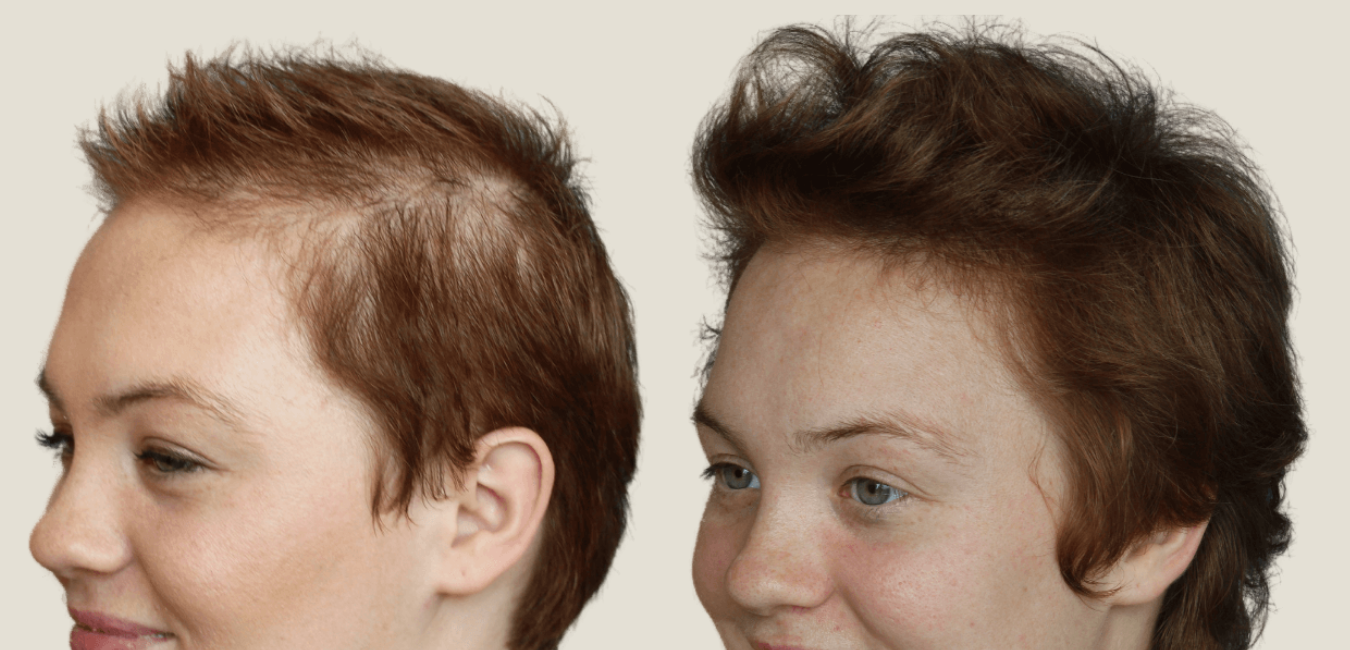
Before and After Hair Loss Transformation - for one of our patients with Telogen Effluvium
The Part Most Articles Miss: Allergies Themselves Can Cause Hair Loss
Here is something that rarely gets covered in this conversation. Chronic allergic inflammation, the kind that keeps your immune system activated over weeks and months, is a known physiological stressor. And physical stress, including the ongoing immune response involved in managing allergies, can trigger a type of hair shedding called telogen effluvium.
Telogen effluvium occurs when the body shifts hair follicles out of the growth phase prematurely in response to a stressor. It typically shows up as diffuse shedding across the scalp two to four months after the triggering event. This means the hair loss you are experiencing may have less to do with the antihistamine and more to do with the allergic condition it is treating.
This distinction matters. If you stop the medication thinking it is the cause, you may be removing the thing managing the inflammation that is actually driving the shedding.

What We Recommend
If you are taking allergy medication and experiencing hair loss, the most useful thing you can do is get a proper clinical evaluation before making any changes to your medication. Hair loss is almost always multifactorial, and identifying what is actually happening in your specific case — through functional testing like our Elite Blueprint Testing, a detailed health history, and a scalp assessment — is far more valuable than guessing.
At NHLMA, we see patients regularly who come in convinced their Zyrtec is causing their hair loss and leave with a much clearer understanding of what is actually going on. Sometimes the medication is a contributing factor. More often, it is one piece of a larger picture involving hormonal shifts, nutritional deficiencies, inflammation, or other triggers that need to be addressed together.
Frequently Asked Questions
Can I just stop taking my antihistamine to see if the shedding improves?
We would not recommend stopping any medication without talking to your prescribing provider first. If your allergies are being managed by the antihistamine, stopping it may increase the very inflammation that could be contributing to your hair loss. Any medication changes should happen under medical guidance.
How long does antihistamine-related hair shedding last?
If a medication is contributing to shedding and you discontinue it with your provider's guidance, hair cycle disruption from telogen effluvium typically resolves within three to six months once the trigger is removed. The key is identifying whether the medication is actually the trigger.
What tests should I ask for if I'm losing hair while on allergy medication?
A thorough hair loss workup should include thyroid function, iron and ferritin levels, inflammatory markers, and hormonal panels. At NHLMA, we use comprehensive functional testing to get a complete picture before recommending any course of treatment.
Is there an allergy medication that is less likely to affect hair?
Second-generation antihistamines like Claritin and Allegra generally have lower rates of patient-reported hair shedding than first-generation options like Benadryl. But the right medication for you depends on your overall health picture, and that conversation belongs with your provider.
The Bottom Line
Allergy medications are not off the hook entirely when it comes to hair loss, but they are rarely the whole story. The relationship between your immune system, histamine, and your hair follicles is more nuanced than most online sources acknowledge.
If you are experiencing shedding and taking a daily antihistamine, the answer is not always to stop the medication. It is to get a proper evaluation from one our Hair Loss Experts in Scottsdale so you actually know what you are dealing with.

Written by the Hair Loss Experts at NHLMA
Founded in 2007, National Hair Loss Medical Aesthetics is the leading Scottsdale-based practice specializing in the science of hair restoration and scalp health.
Our team of clinicians combines functional medicine, advanced diagnostics, and the latest regenerative treatments to address hair loss at its root cause. Through a clinical, evidence-based lens, not guesswork or one-size-fits-all solutions. We are not just writing about this. It is what we do every day.