Can Stress Cause Hair Loss? Understanding Telogen Effluvium

We hear this all the time in the clinic. Someone comes in, visibly shaken, holding a clump of hair they found in the shower drain. "I've been under so much stress lately," they say. "Could that actually be doing this?"
The answer is yes. And the explanation is both more specific and more reassuring than most people expect.
Let's talk about what's really happening.
The Condition Has a Name: Telogen Effluvium
Telogen effluvium (TE) is one of the most common forms of hair loss, and also one of the most misunderstood. It shows up as widespread shedding across your entire scalp rather than in patches or along a specific hairline. The part that catches most people off guard is the timing. It typically begins two to three months after whatever triggered it. So by the time your hair starts falling out, the stressful event may already feel like old news.
According to NIH StatPearls, telogen effluvium happens when your body experiences significant stress and responds by pushing a large number of hair follicles out of the active growing phase and into a resting phase early. After sitting in that resting phase for about three months, those hairs shed all at once. That's the sudden wave of shedding that brings so many people through our doors.
Your Hair Has a Growth Cycle
Here's something most people never learn: every single hair on your head is on its own schedule, cycling through three phases continuously.
The growing phase lasts two to seven years. The transitional phase lasts a couple of weeks. The resting phase lasts about three months, after which the hair naturally sheds and the follicle starts fresh.
Under normal conditions, about 85 to 90 percent of your hair is actively growing at any point in time. When stress intervenes and throws a large group of follicles into the resting phase at the same time, you end up with far more shedding than usual all at once. That's the shift from everyday hair loss to something that feels alarming.
What Stress Does Inside Your Body
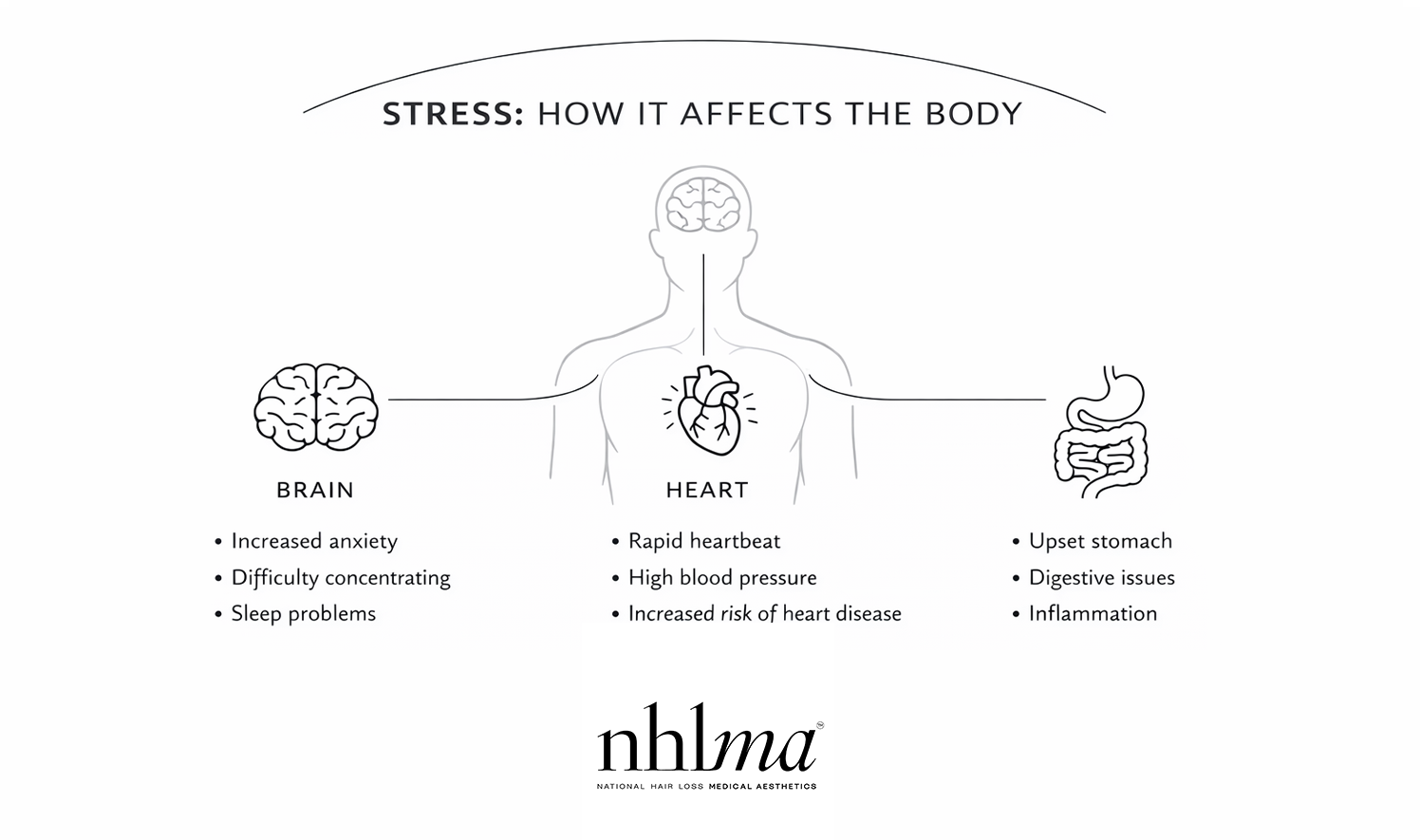
Your body treats stress as a threat, and it responds accordingly. When you're under pressure, your body releases a surge of hormones, most notably cortisol, often called the stress hormone.Research from the Journal of Drugs in Dermatology shows that high cortisol levels push hair follicles out of the growing phase ahead of schedule.
On top of that,a 2025 review in JAAD Reviews found that stress also sets off an inflammatory response in the body that makes it even harder for your follicles to get back to growing. Think of it like your hair getting benched mid-game and then struggling to get back on the field.
The simple version: stress sends a signal to your body that tells it to shift resources away from things like hair growth and redirect them toward survival. Your hair pays the price.
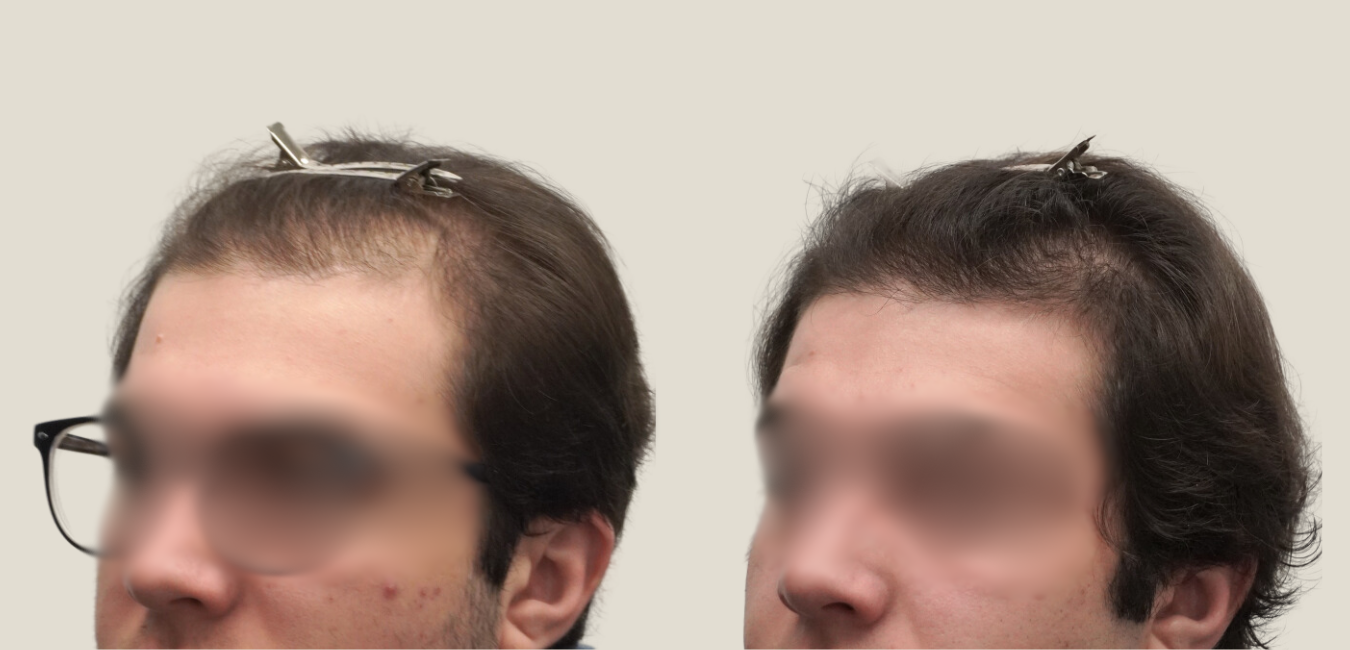
Telogen Effluvium Patient - 90 Days Before and After Minoxidil and Laser
Stress Comes in More Forms Than You Think
This is something we really want you to hear. Telogen effluvium is triggered by all kinds of stress on the body, and it can be emotional, physical, or nutritional.A comprehensive clinical review identifies common triggers that include major illness or surgery, significant weight loss, postpartum hormonal changes, low iron or vitamin D levels, thyroid issues, and prolonged emotional strain.
A lot of people walk in and say "I feel fine" or "nothing major happened." But months of poor sleep, skipping meals, overworking, and running on empty absolutely count. Your body keeps score even when your mind is in denial.
What to Watch For
Stress-related hair loss looks a little different from other types, which can help you identify what you're dealing with.
You'll typically see thinning spread across your whole scalp, most noticeably at your part line. Daily shedding may climb well above the normal range of 50 to 100 hairs per day. The shed hairs often have a small white bulb at the root, a sign they completed the resting phase. And the shedding usually begins two to three months after the stressful event, so the timing can feel completely disconnected from the cause.
The Good News
Telogen effluvium is, in most cases, temporary. Research connecting mental health and hair loss confirms that once the trigger is addressed, your follicles are fully capable of returning to the growth phase. The follicle is alive. It is resting, and it can wake back up.

Most people see real improvement within three to six months of resolving the underlying trigger. The timeline depends on how long the stressor went on and whether there are any nutritional or hormonal factors still in the mix.
How We Help at NHLMA
When you come to us with suspected telogen effluvium, we start by listening. We want to understand what's been going on in your life, your health history, and what your body might be missing. From there, we'll run bloodwork to check your iron, ferritin, thyroid, and vitamin D levels, because deficiencies in any of these can both trigger and prolong TE.
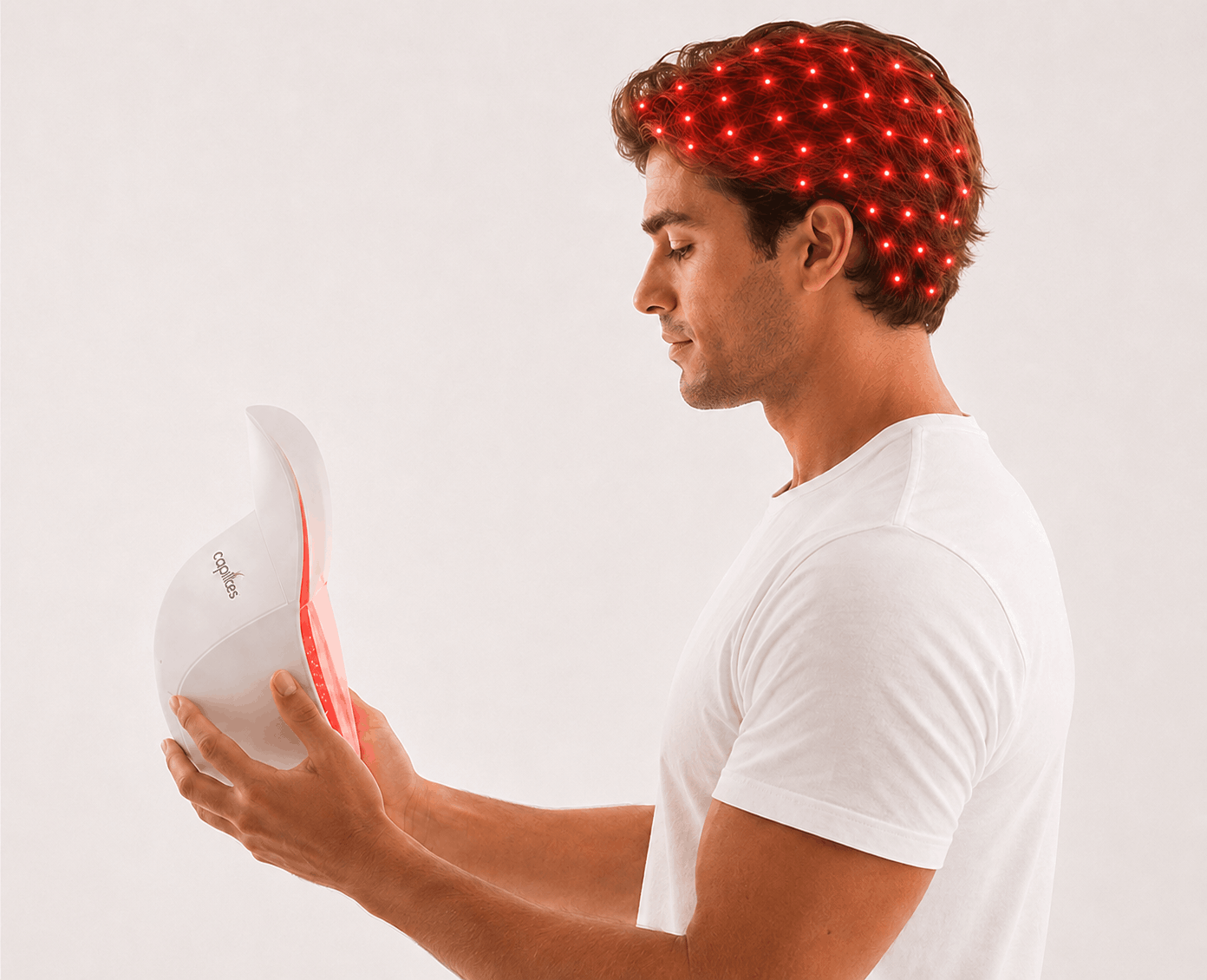
Hair restoration treatment looks different for everyone. Some patients need targeted supplementation. Others benefit from scalp-stimulating treatments like low-level laser therapy or PRP to help wake follicles back up. Most benefit from a combination approach that addresses both the shedding and whatever set it off in the first place.
We also know that losing your hair, even temporarily, is hard. It affects how you feel about yourself. That matters to us, and we want you to feel genuinely supported through every step of this process.
If your hair has been shedding more than usual and life has felt heavy lately, please come talk to us. Your hair is telling you something. We're here to help you understand what it's saying.
Ready to figure out what's driving your hair loss? Book a consultation with our team at NHLMA and let's get to the root of it together.