
Early Signs of Hair Loss You Shouldn't Ignore (And What to Do Next)
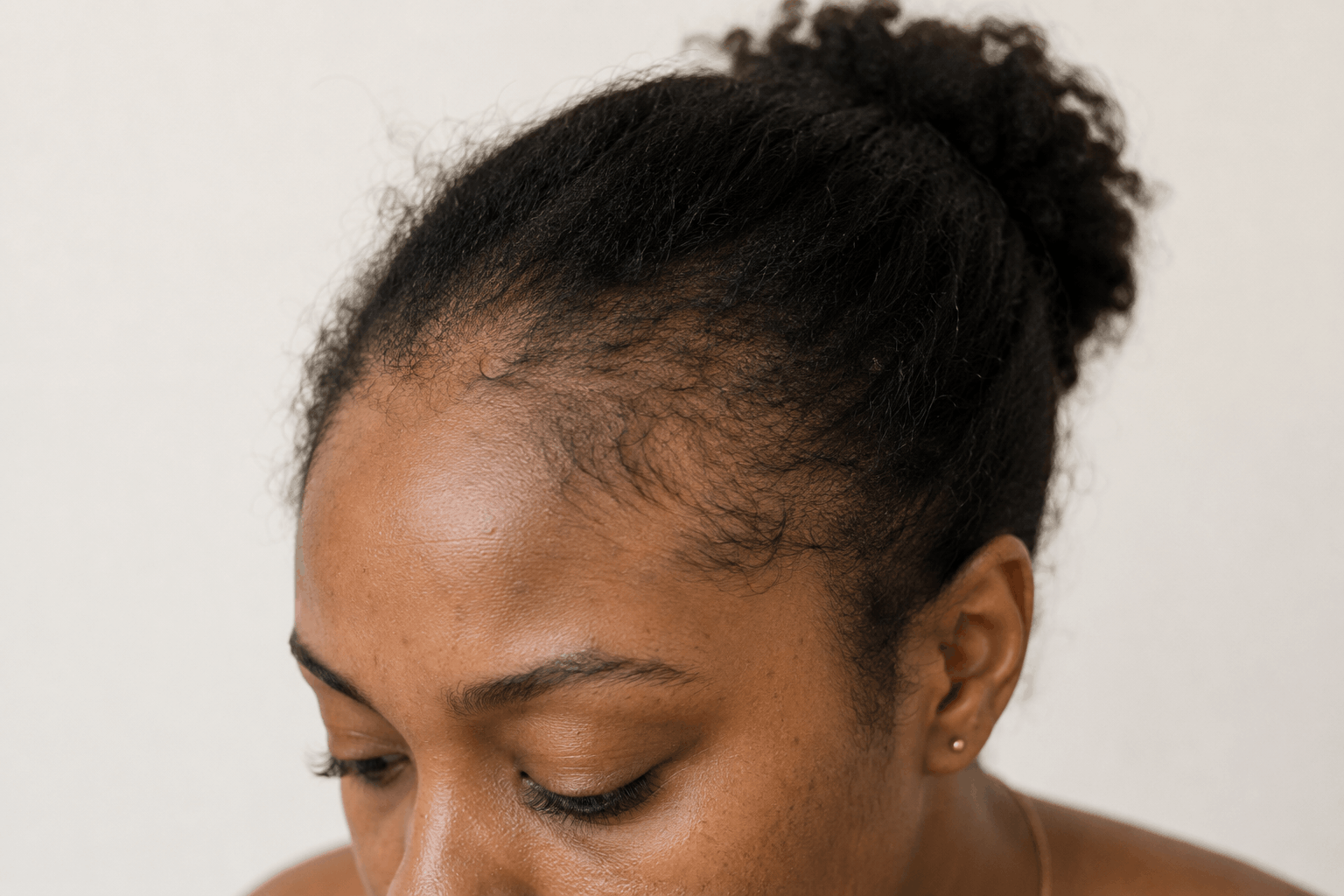
Hair loss rarely announces itself all at once. For most people, it's a slow and gradual process that's easy to dismiss, until one day it isn't. You notice the drain is collecting more hair than it used to. Your part looks a little wider. Your ponytail feels a little thinner. And you start wondering how long that's been happening.
The earlier you catch hair loss, the more you have to work with. Follicles that are miniaturized or dormant can often be revived with the right treatment. Follicles that have been inactive for years are a much harder conversation. Knowing what to look for, and when to take it seriously, is one of the most valuable things you can do for your hair.
Here are the signs that deserve your attention.
Your Part Looks Wider Than It Used To
For women especially, a widening part is one of the earliest and most telling signs of female pattern hair loss (FPHL), a type of hair loss. It happens so gradually that it's easy to miss in real time. If you look at a photo from a year or two ago and notice a difference in how much scalp is visible along your part, that's worth paying attention to.
You're Seeing More Hair Than Usual in the Shower or on Your Brush
Losing 50 to 100 hairs per day is within the normal range. But if you're consistently noticing a significant increase in hair in the shower drain, on your pillowcase, or on your brush over several consecutive weeks, that's a pattern rather than a phase.
Context matters here. A burst of shedding for a few weeks following a stressful event, illness, or hormonal shift is normal and usually temporary. Persistent elevated shedding over months is the signal to take seriously.
Your Hair Texture Has Changed
Hair that was once thick and full starting to feel fine, limp, or flat is a sign that your follicles may be miniaturizing, which means producing progressively thinner strands over time. This is one of the hallmarks of androgenetic alopecia and responds well to treatment when caught before the miniaturization progresses too far.
Your Scalp Is More Visible at the Crown
Increased scalp visibility at the top of the head, or a growing area of thinning, is one of the more advanced early warning signs. If you've started styling your hair differently to cover an area, or if you notice it in photographs, it's worth having it properly evaluated sooner rather than later.
Your Hairline Has Shifted
Men typically notice a receding hairline first, with gradual retreat at the temples or the forehead. Women can also experience hairline changes, though they more commonly present as diffuse thinning at the crown. Any shift from where your hairline has historically been is worth noting.
Your Scalp Feels Off
Chronic scalp itching, flaking, redness, tenderness, or irritation isn't just uncomfortable, it can be a sign that your scalp environment isn't supporting healthy hair growth. Conditions like seborrheic dermatitis and scalp inflammation can contribute to shedding and impair follicle function over time. A healthy scalp is the foundation of everything else.
Your Skin Is Changing Too
The skin and hair follicle share more biology than most people realize. Changes in skin texture, increased breakouts, persistent dryness, or a loss of your natural glow can sometimes point to the same underlying issues affecting your hair, hormonal shifts, nutritional deficiencies, chronic inflammation, or stress. If you're noticing changes in both your hair and your skin around the same time, that's worth mentioning at a consultation.

What to Do If You're Seeing These Signs
The most important thing: don't wait. Hair loss is almost always easier and more effectively treated in its earlier stages, and the gap between "I should probably look into this" and "I wish I had looked into this sooner" is something we hear from clients more than we'd like.
At NHLMA in Scottsdale, a proper evaluation includes a microscopic scalp analysis, a detailed review of your hair loss pattern and personal history, and where appropriate, comprehensive lab work to identify nutritional, hormonal, or systemic contributors. We don't guess, and we don't offer generic protocols. We find out what's actually happening and build a plan around that.
Frequently Asked Questions
How much daily hair loss is considered normal?
Losing 50 to 100 hairs per day is within the normal range as part of the hair cycle. If you're consistently losing significantly more than that over several weeks, or if you're noticing visible thinning or increased scalp exposure, it's worth a professional evaluation.
Can hair loss be reversed if caught early?
In many cases, yes. The earlier you address hair loss, the more viable follicles you have to work with and the better your response to treatment tends to be. Follicles that have been miniaturizing for a short time often respond well to the right therapies.
What causes sudden hair loss?
Sudden or significant shedding is often triggered by a shock to the system, physical stress, illness, surgery, rapid weight loss, hormonal changes including postpartum, or nutritional deficiencies. This pattern of shedding, clinically called telogen effluvium, is usually temporary but identifying the trigger matters for making sure it resolves properly.
At what age does hair loss typically begin?
Hair loss can begin at any age. Androgenetic alopecia most commonly starts in the 20s and 30s for men, and in the 40s and 50s for women as hormones shift. That said, we see clients across a very wide age range, and hair loss does not follow a single predictable timeline.
Is thinning hair just a normal part of aging?
Some gradual change in hair density over time is normal. But significant thinning, visible scalp, or meaningful changes in texture are not things you simply have to accept as inevitable. Effective treatments exist at every stage of hair loss, and age alone is not a reason to wait and see.
When should I see a hair loss specialist?
If you've been noticing increased shedding, changes in texture, or visible thinning for more than a few months, it's time to book a consultation. The earlier you come in, the more options you have. At NHLMA in Scottsdale, we offer comprehensive hair loss evaluations and personalized treatment plans, and virtual consultations are available for clients who aren't local.

Written by the Hair Loss Experts at NHLMA
Founded in 2007, National Hair Loss Medical Aesthetics is the leading Scottsdale-based practice specializing in the science of hair restoration and scalp health.
Our team of clinicians combines functional medicine, advanced diagnostics, and the latest regenerative treatments to address hair loss at its root cause. Through a clinical, evidence-based lens, not guesswork or one-size-fits-all solutions. We are not just writing about this. It is what we do every day.