
Neurocosmetics: The Science Linking Stress and Skin Aging

Your skin is not a passive barrier. It is an active sensory organ that talks directly to your brain, and your brain talks back. That two way conversation is the foundation of neurocosmetics, one of the fastest growing areas of clinical skincare research heading into 2026.
At NHLMA, we look at skin and hair health as a whole body system rather than a set of isolated symptoms. Neurocosmetics gives us a scientific language for something patients have described for years: stress shows up on your face.
What Neurocosmetics Actually Means
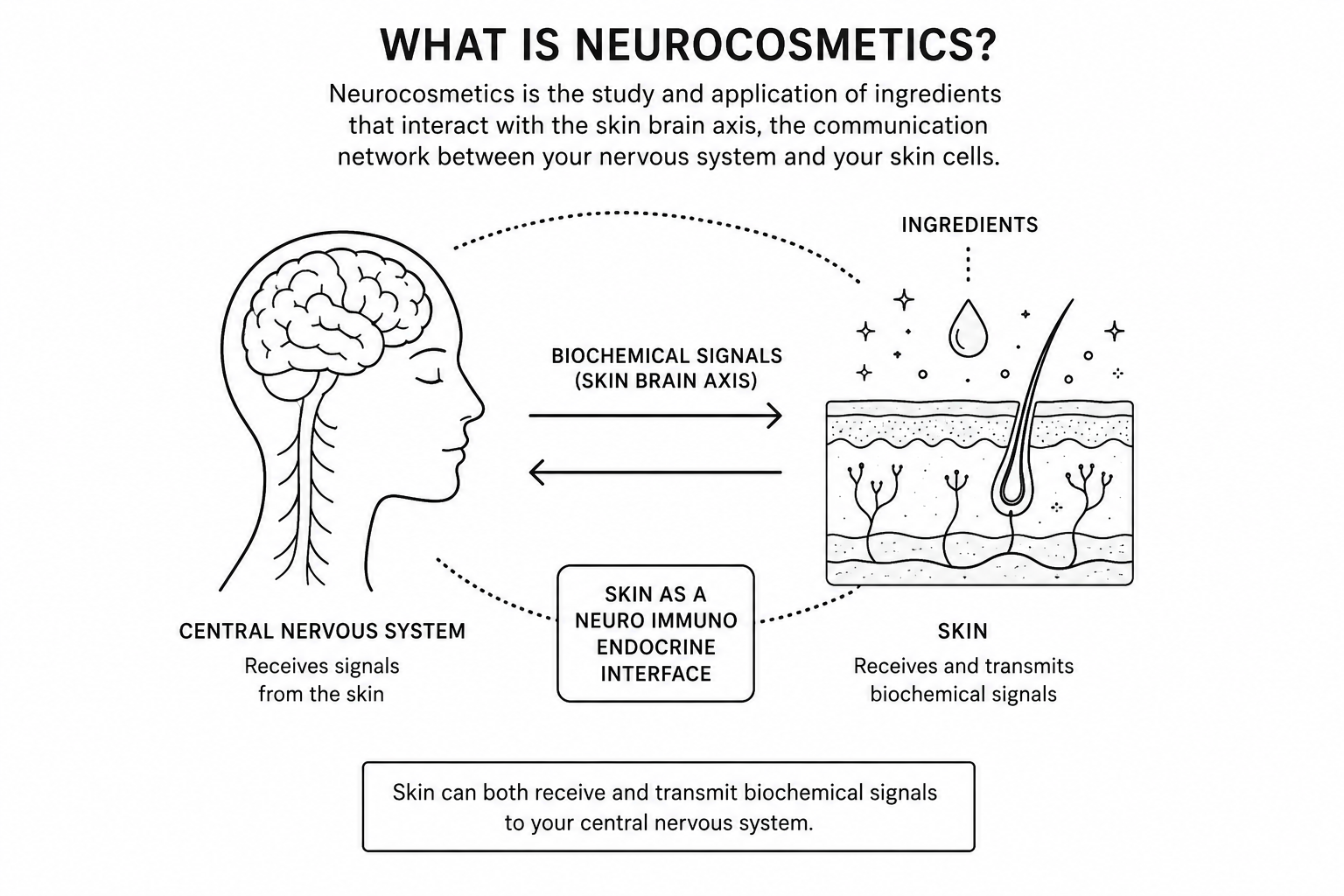
Neurocosmetics is the study and application of ingredients that interact with the skin brain axis, the communication network between your nervous system and your skin cells. Researchers describe skin as a neuro immuno endocrine interface, meaning it can both receive and transmit biochemical signals to your central nervous system.
This is not a marketing term. It is an emerging clinical field, with recent research published in journals including Cosmetics (MDPI) and ScienceDirect exploring how targeted compounds can calm this communication system and visibly improve skin.
How Stress Physically Ages Your Skin
When you experience psychological stress, your body activates the hypothalamic pituitary adrenal axis, commonly known as the HPA axis. This triggers a cascade:
Your brain and pituitary gland release corticotropin releasing hormone and adrenocorticotropic hormone. Your adrenal glands respond by secreting cortisol, catecholamines, and androgens. Peripheral nerve endings in your skin release neuropeptides such as substance P and calcitonin gene related peptide.
The result is not just a feeling of stress. It is a measurable biological event. Chronically elevated cortisol impairs collagen synthesis, slows barrier repair, and increases inflammation, all of which accelerate visible signs of aging including fine lines, dullness, and sensitivity
The Role of Neuropeptides in Skincare
Neuropeptides are small protein molecules that act as messengers between nerve cells and skin cells. Your skin naturally produces and responds to compounds including serotonin and dopamine, which influence inflammation, pigmentation, cell turnover, and even how your skin perceives touch and sensation.
Neurocosmetic formulations are designed to work with this system rather than against it, using peptides and neuropeptide mimicking ingredients that can help regulate the stress response at the skin level.
The clinical data is genuinely promising. A randomized, placebo-controlled trial on the neuropeptide acetyl hexapeptide-3 (commonly known as Argireline) found a 48.9 percent total anti-wrinkle efficacy after just four weeks of consistent twice-daily use, with objectively measured decreases in skin roughness, compared to no meaningful change in the placebo group.
Why This Matters for Hair Health Too
The skin brain axis does not stop at your face. The scalp is skin, and it is subject to the same stress driven biology. Chronic cortisol elevation is increasingly linked to telogen effluvium, a form of stress triggered shedding, and can disrupt the natural hair growth cycle by pushing follicles prematurely into a resting phase.
This is part of why NHLMA takes a whole system approach to hair restoration. Addressing stress physiology alongside topical and regenerative treatments gives patients a more complete path to visible improvement.
Bringing Neurocosmetic Science Into Your Routine
You do not need to wait for a lab breakthrough to benefit from this research. A few evidence informed steps:
Support your HPA axis with consistent sleep, since cortisol regulation is closely tied to circadian rhythm. You can read more about how stress affects hair loss here.
Choose formulations with peptides and neuropeptide supporting ingredients rather than relying on generic anti aging language.
Treat scalp health with the same seriousness as facial skin, since both respond to the same stress signaling pathways.
Consider clinical grade options, since over the counter neurocosmetic products vary widely in ingredient concentration and quality.
The NHLMA Approach
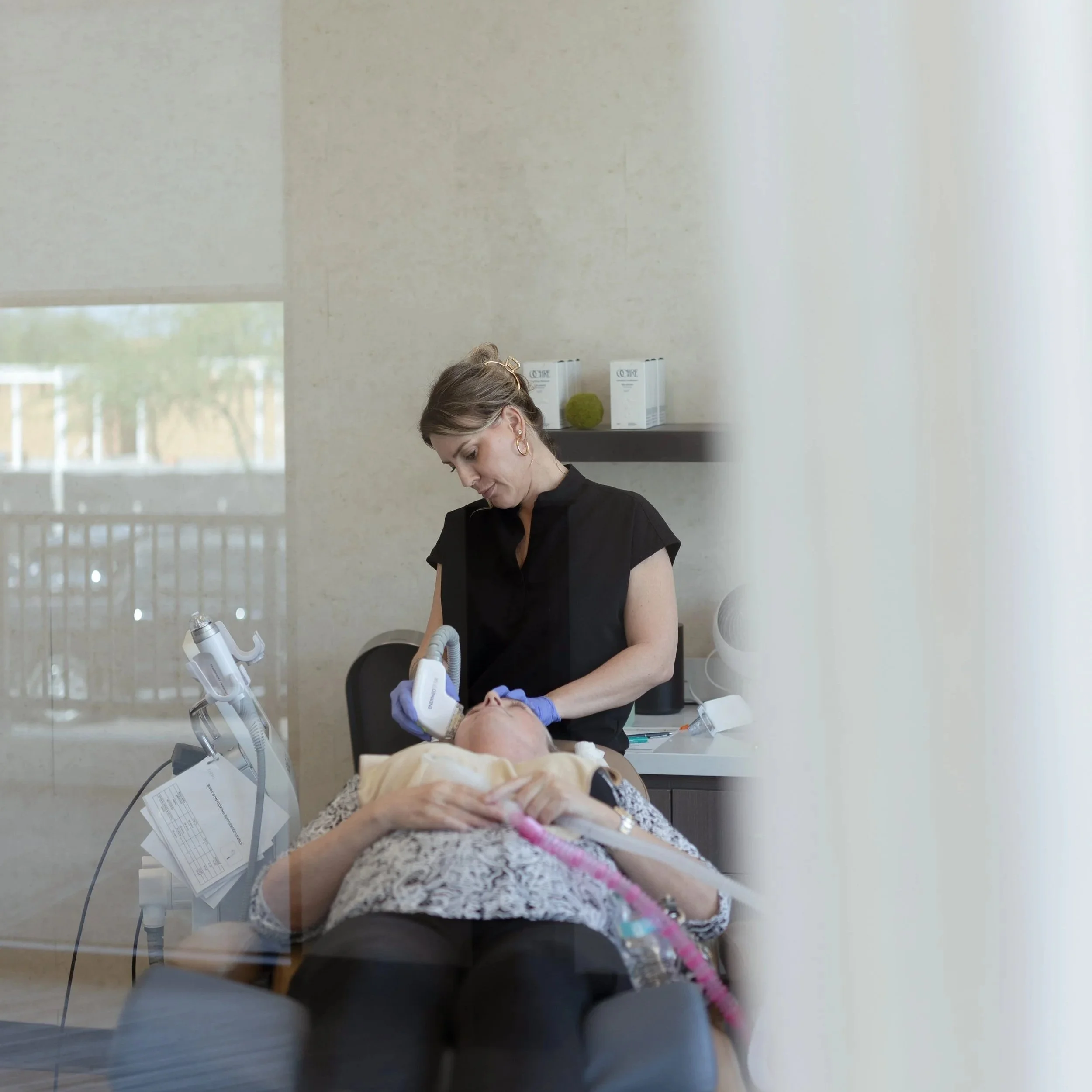
The clinical skincare we use in our Scottsdale skincare med spa was built around the same biomimetic peptide and neuropeptide science driving this research, formulated to support both facial skin and scalp health. If you are dealing with visible signs of stress related aging, thinning, or a scalp that simply is not responding to over the counter products, our team can build a personalized plan grounded in this science rather than trends.
Neurocosmetics is not about adding another step to your routine. It is about understanding that skin health, hair health, and nervous system health were never separate to begin with.
Frequently Asked Questions
What is the skin brain axis?
The skin brain axis is the two way communication network between your nervous system and your skin, carried out through hormones such as cortisol, neuropeptides such as substance P, and shared receptors that let your brain and your skin cells respond to the same biochemical signals.
Can stress really cause visible skin aging?
Yes. Chronic activation of the hypothalamic pituitary adrenal axis raises cortisol levels, which impairs collagen synthesis, slows barrier repair, and increases inflammation. Over time this contributes to fine lines, dullness, and increased sensitivity.
Are neurocosmetic ingredients safe for sensitive skin?
Most neuropeptide and neurocosmetic formulations are designed to calm inflammatory signaling rather than trigger it, which generally makes them well tolerated, including for reactive or sensitive skin types. As with any active ingredient, patch testing a new product is still a good idea.
How long does it take to see results from neurocosmetic skincare?
Clinical studies on neuropeptide targeting compounds have shown measurable improvements in wrinkle depth and elasticity within twelve to twenty four weeks of consistent use, similar to the timeline for many other clinical grade actives.
Do neurocosmetics work for scalp and hair health too?
The scalp is skin, and it responds to the same stress signaling pathways. Chronic cortisol elevation is linked to stress triggered shedding known as telogen effluvium, so addressing the skin brain axis can support scalp health alongside facial skin.
Sources
"Beyond Beauty: Neurocosmetics, the Skin Brain Axis, and the Future of Emotionally Intelligent Skincare."Clinics in Dermatology / ScienceDirect, 2025.
"Neurocosmetics and the Skin–Brain Axis from a Psychological and Psychiatric Standpoint."Cosmetics (MDPI), 2026.
Cannizzaro, L., et al. "Neurocosmetics in Skincare—The Fascinating World of Skin–Brain Connection: A Review to Explore Ingredients, Commercial Products for Skin Aging, and Cosmetic Regulation."Cosmetics (MDPI), 2021.
Wang, Y., et al. "The Anti-Wrinkle Efficacy of Argireline, a Synthetic Hexapeptide, in Chinese Subjects: A Randomized, Placebo-Controlled Study."American Journal of Clinical Dermatology, 2013.

Written by the Hair Loss and Skin Experts at NHLMA
Founded in 2007, National Hair Loss Medical Aesthetics is the leading Scottsdale-based practice specializing in the science of hair restoration and medical aesthetics.
At NHLMA in Scottsdale, our clinicians don't guess. They diagnose. Using functional medicine, advanced diagnostics, and the latest regenerative treatments, our team identifies what your skin actually needs. Then builds a protocol around it. This is what we do every day.