
Hyaluronic Acid Serum Benefits: What It Actually Does for Your Skin
If you’ve spent any time looking at skincare, you’ve seen the claim that hyaluronic acid can “hold up to 1,000 times its weight in water.” It’s repeated everywhere, but it’s not something that holds up under real testing.
A 2024 peer-reviewed study in the Journal of Cosmetic Science (Borchers & Pirrung) tested this claim directly with lab methods that measure water-binding, and found no evidence hyaluronic acid holds anywhere near 1,000 times its weight; it behaved more like a dilute glycerin solution. That’s still real, meaningful hydration, just not the exaggerated number most brands quote.
So what does hyaluronic acid serum actually do, who should be using it, and how do you pick one that won’t backfire on sensitive or recently-treated skin? Here’s what’s worth knowing before you add one to your routine.
What Hyaluronic Acid Actually Does
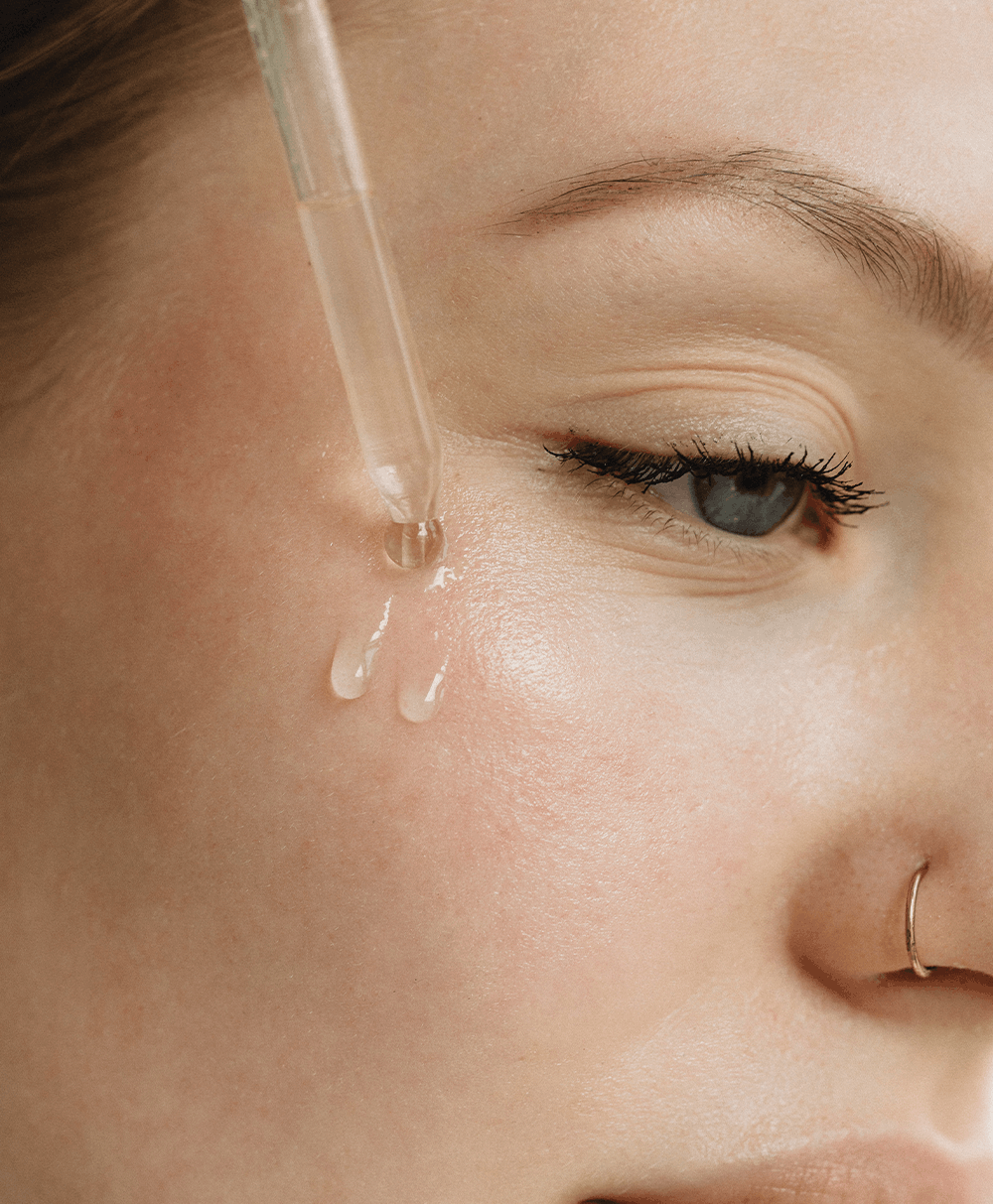
Hyaluronic acid is a humectant that draws water into the outer layer of skin rather than adding oil or changing your skin’s natural barrier. In a well-formulated serum, that means:
Immediate surface hydration. Skin looks plumper and feels smoother shortly after application, because the molecule is pulling moisture to where you put it.
Support for the skin barrier. Properly hydrated skin is better able to function as a barrier, which matters most right after procedures that temporarily compromise it (microneedling, laser, chemical peels).
A non-comedogenic hydration option. Because it’s water-based rather than oil-based, it’s a common pick for people who want hydration without added shine or clogged pores.
What it doesn’t do: replace a moisturizer’s occlusive function (locking that water in), treat acne or pigmentation, or “fill” fine lines the way an injectable does. It’s a hydration ingredient, not a one-product skincare routine.
Why Molecular Weight (and What’s Not in the Bottle) Matters
Not all hyaluronic acid serums are the same, even when the label says “100% hyaluronic acid.” Two things to look for:
What else is mixed in. Some formulas dilute hyaluronic acid with oils, added fragrance, or filler ingredients that can increase the odds of irritation, particularly on sensitive or freshly-treated skin. A simpler ingredient list is usually the safer choice for that use case.
How it’s preserved. A water-based serum needs some form of preservative system to stay shelf-stable and safe to use over time; a formula that’s genuinely preservative-free has a much shorter usable life. “No added oils or fragrance” is a meaningfully different (and checkable) claim than “no preservatives at all.”
Who Should Be Using a Hyaluronic Acid Serum
Anyone with dry or dehydrated skin looking for lightweight hydration that layers under moisturizer or sunscreen.
People with sensitive skin who need hydration without added fragrance or oils that can trigger reactions.
Post-procedure skin. After treatments like microneedling or laser hair removal, skin is temporarily more reactive and benefits from calming, barrier-supporting hydration rather than active ingredients.
What the Research Actually Shows
Two independent controlled studies on topical hyaluronic acid give a clearer picture than marketing copy usually does:
A 2021 study in Dermatology and Therapy (Draelos et al.) tested a topical HA serum on 40 women over 6 weeks, measuring hydration with a corneometer rather than self-report. Hydration jumped 134% immediately after application and stayed 55% above baseline at 6 weeks; fine lines improved 31% by investigator assessment.
A 2017 study in Clinical, Cosmetic and Investigational Dermatology (Milani & Sparavigna) compared HA-treated vs. untreated skin on the same 20 women and found hydration 21% higher on the treated side after 24 hours, with meaningfully reduced water loss through the skin barrier.
For post-procedure use specifically, a 2026 study in Frontiers in Medicine (Yen & Yen) followed 113 patients recovering from fractional laser treatment and found the group using a topical HA product healed faster (redness resolved in about 5.3 days vs. 6.9 days with standard care) and had lower markers of inflammation.
None of this is tied to NHLMA’s specific formula. It’s general research on topical hyaluronic acid as an ingredient, but it’s the kind of real, sourced evidence that holds up better than “1,000x its weight in water.”
How to Use It
Apply a thin layer to clean skin and allow it to dry before layering anything else on top, morning and evening. A little goes further than people expect; using more than a thin layer doesn’t add benefit and just sits on the skin.
FAQs
Does hyaluronic acid serum really hold 1,000 times its weight in water?
No. A 2024 peer-reviewed study in the Journal of Cosmetic Science (Borchers & Pirrung) tested this directly and found no evidence for anywhere near that ratio; hyaluronic acid behaved more like a dilute glycerin solution under the same testing. It’s still an effective hydrating ingredient; the “1,000x” figure is a marketing exaggeration that’s been repeated so often it’s treated as fact.
Can I use hyaluronic acid serum after microneedling or laser treatments?
A simple, fragrance-free hyaluronic acid serum is one of the more commonly recommended hydration steps for post-procedure skin, since it hydrates without adding oils or actives that could irritate a compromised barrier. Always follow your provider’s specific aftercare instructions first.
Is hyaluronic acid serum safe for sensitive skin?
Generally yes, since it’s a hydrating ingredient rather than an active that exfoliates or stimulates the skin. The bigger variable is usually what else is in the formula; added fragrance or essential oils are more likely culprits for irritation than the hyaluronic acid itself.
Is there actual research behind hyaluronic acid serums, or is it just marketing?
There’s real, controlled research on topical HA: corneometer-measured hydration studies (Draelos et al. 2021; Milani & Sparavigna 2017) and a 2026 study on faster healing after laser treatment (Yen & Yen). None of it supports the “1,000x its weight in water” claim, and some of it is industry-sponsored, so it’s worth reading with that in mind, but it’s a meaningfully different thing than an unsupported marketing number.
Ready to try a pure Hyaluronic Acid for yourself?
NHLMA's medical-grade 100% pure hyaluronic acid serum is nature's own moisturizer, reformulated the way it should be: no oil, no preservatives, no diluted concentration — just hyaluronic acid, prepared in small batches, giving your skin a hydration infusion in one simple step.
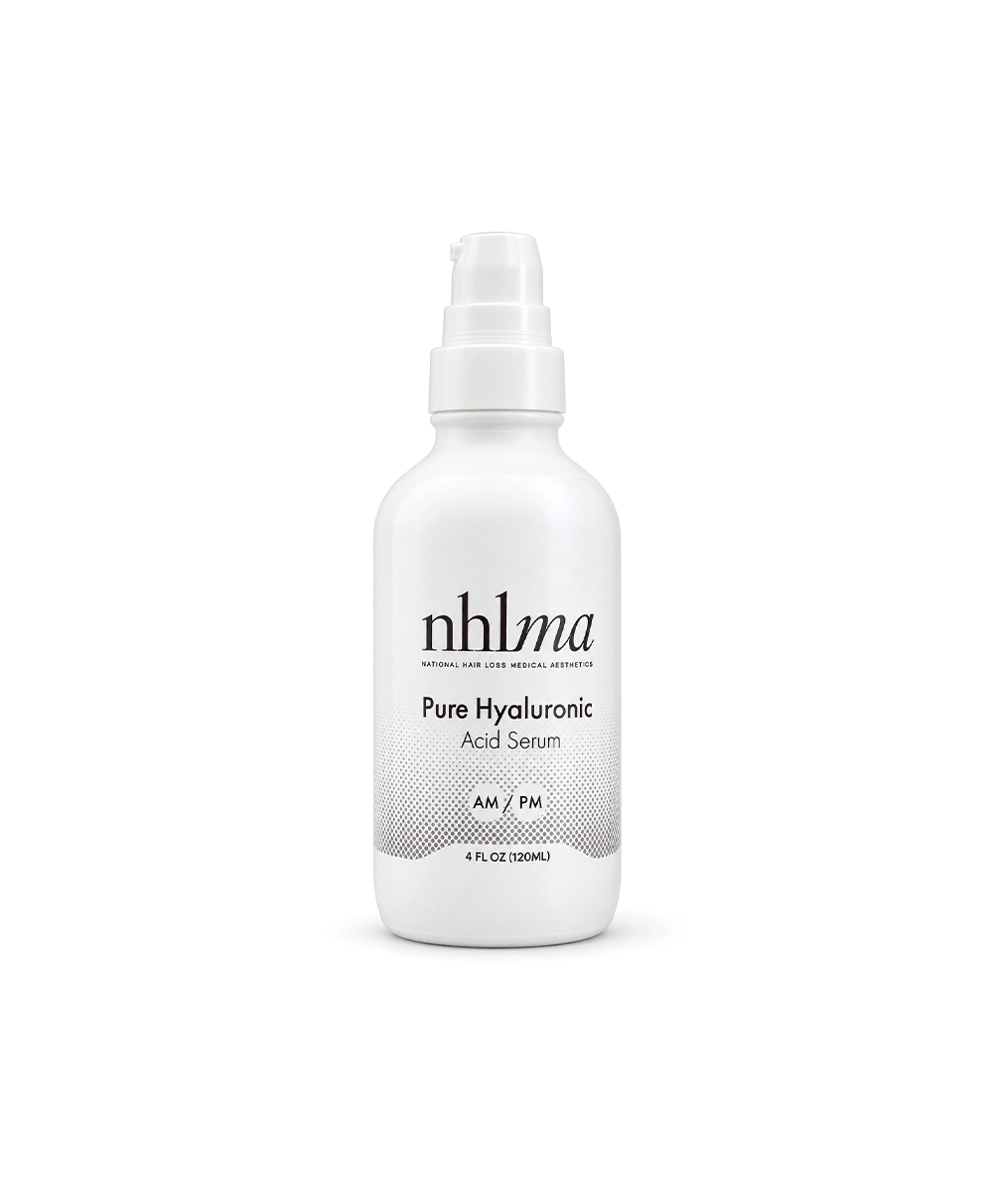
100% Pure Hyaluronic Acid — No Oil, No Preservatives, No Dilution
NHLMA's medical-grade 100% pure hyaluronic acid serum is nature's own moisturizer, reformulated the way it should be: no oil, no preservatives, no diluted concentration — just hyaluronic acid, prepared in small batches, giving your skin a hydration infusion in one simple step.
Hyaluronic acid occurs naturally in the body in abundance while we're young, and depletes as we age. This serum is designed to help restore what's lost through that process.
WHAT MAKES NHLMA’S SERUM DIFFERENT
Most hyaluronic acid products on the market contain oil, preservatives, and a low percentage of actual hyaluronic acid. Our barrier-repairing serum is prepared in small batches and contains 100% hyaluronic acid — meaning you get less of the filler and more of the active ingredient.
→ Learn more about the benefits of a pure hyaluronic acid serum.

Written by the Hair Loss and Skin Experts at NHLMA.
Founded in 2007, National Hair Loss Medical Aesthetics is the leading Scottsdale-based practice specializing in the science of hair restoration and medical aesthetics.
At NHLMA in Scottsdale, our clinicians don't guess. They diagnose. Using functional medicine, advanced diagnostics, and the latest regenerative treatments, our team identifies what your skin actually needs. Then builds a protocol around it. This is what we do every day.