
Low Dose Oral Minoxidil: Is the Pill Worth Skipping the Foam?
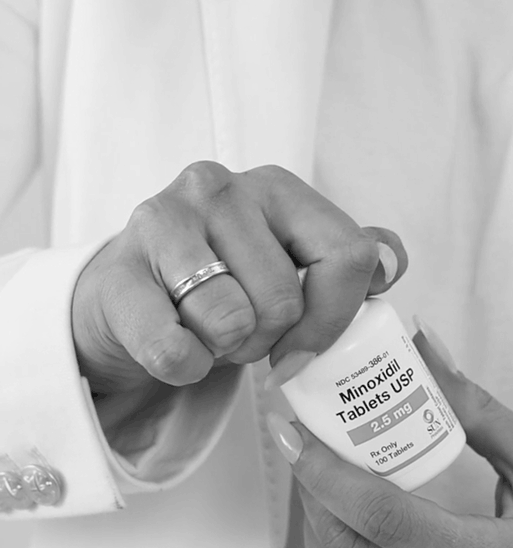
If topical minoxidil has been more hassle than it is worth, a low dose pill might do the same job with a lot less mess.
Minoxidil works. That part is not in question. What trips people up is actually using it correctly and consistently for the months it takes to see results, since twice daily foam or liquid applied to the scalp is greasy, time consuming, and easy to fall behind on. Low dose oral minoxidil has become one of the fastest growing conversations in hair loss treatment for exactly that reason. It is the same active ingredient, taken as a small daily pill instead.
How It Works
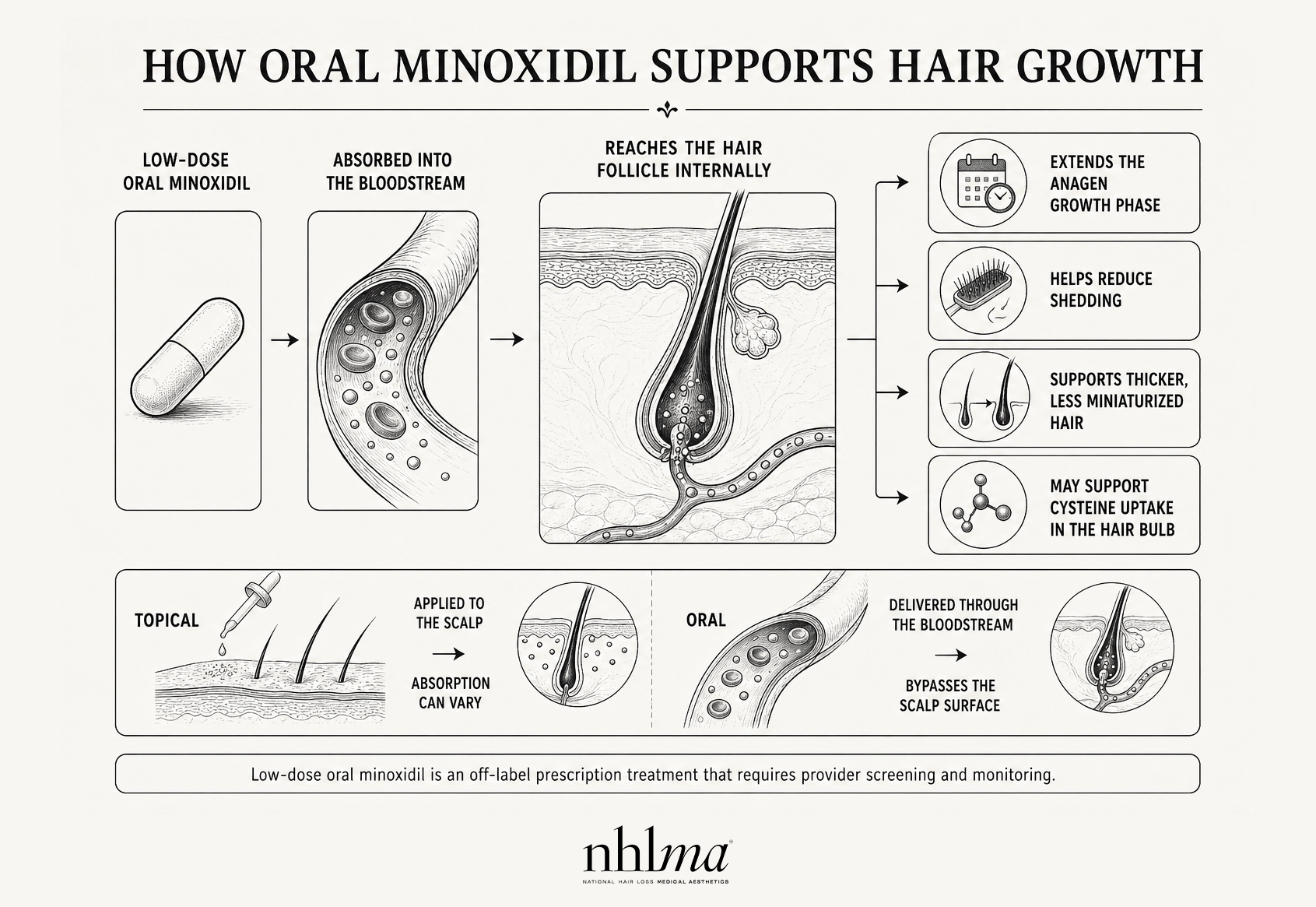
Oral minoxidil works through the same core mechanism as the topical version. It prolongs the anagen, or active growth, phase of the hair cycle, reduces shedding, and helps reverse the miniaturization of follicles affected by androgenetic alopecia, in part by increasing cysteine uptake in the hair bulb. Taken orally, it reaches the follicle through the bloodstream rather than through the scalp's surface, which sidesteps the absorption problems that make topical formulas inconsistent for some people.
What the Research Shows
A randomized clinical trial published in the Journal of the American Academy of Dermatology compared 1 milligram of oral minoxidil daily against 5 percent topical minoxidil solution in women with female pattern hair loss and found comparable improvement in hair diameter between the two, despite the oral dose being far lower than what is typically used to manage blood pressure.
A more recent meta analysis of oral minoxidil across multiple studies reported response rates above 65 percent for hair growth and reduced shedding, reinforcing that this is not a fringe alternative but an increasingly well supported option.
Dosing, and Why More Is Not Automatically Better
Effective doses are much lower than most people expect. Women typically respond to 0.25 to 2.5 milligrams per day, while men typically need 2.5 to 5 milligrams per day. Higher doses do not necessarily produce better results and are associated with a higher rate of side effects, which is why dosing should be set and monitored by a provider rather than self adjusted.
The Trade Off Worth Knowing About
The most common side effect is hypertrichosis, unwanted hair growth in areas beyond the scalp, such as the forearms, upper lip, or sideburns. It is more noticeable in women than men and is the main reason some people choose to stay with the topical version despite its inconvenience. Oral minoxidil can also cause fluid retention, a faster heart rate, or lower blood pressure in some people, which is why baseline health history and ongoing monitoring matter. A recent clinical summation on the safe use of oral and topical minoxidil outlines exactly what that monitoring should include.
Minoxidil in any form should be avoided during pregnancy, which is an important conversation to have with your provider if it is relevant to you.
How NHLMA Determines Whether Minoxidil Is Right for You
At NHLMA, choosing minoxidil is not as simple as deciding between a pill and a topical formula. Before recommending either option, we first determine what type of hair loss is present, what may be contributing to it, and whether minoxidil addresses the full picture.
A detailed scalp and follicle evaluation allows us to document your current density, shedding pattern, and degree of follicle miniaturization. This helps distinguish androgenetic alopecia, which often responds well to minoxidil, from temporary shedding or another condition that may require a different approach.
Comprehensive lab work can reveal internal factors such as low ferritin, thyroid dysfunction, vitamin D deficiency, nutrient imbalances, inflammation, or hormonal changes. Minoxidil may support growth, but it cannot correct an untreated deficiency or underlying medical issue that is continuing to disrupt the hair cycle.
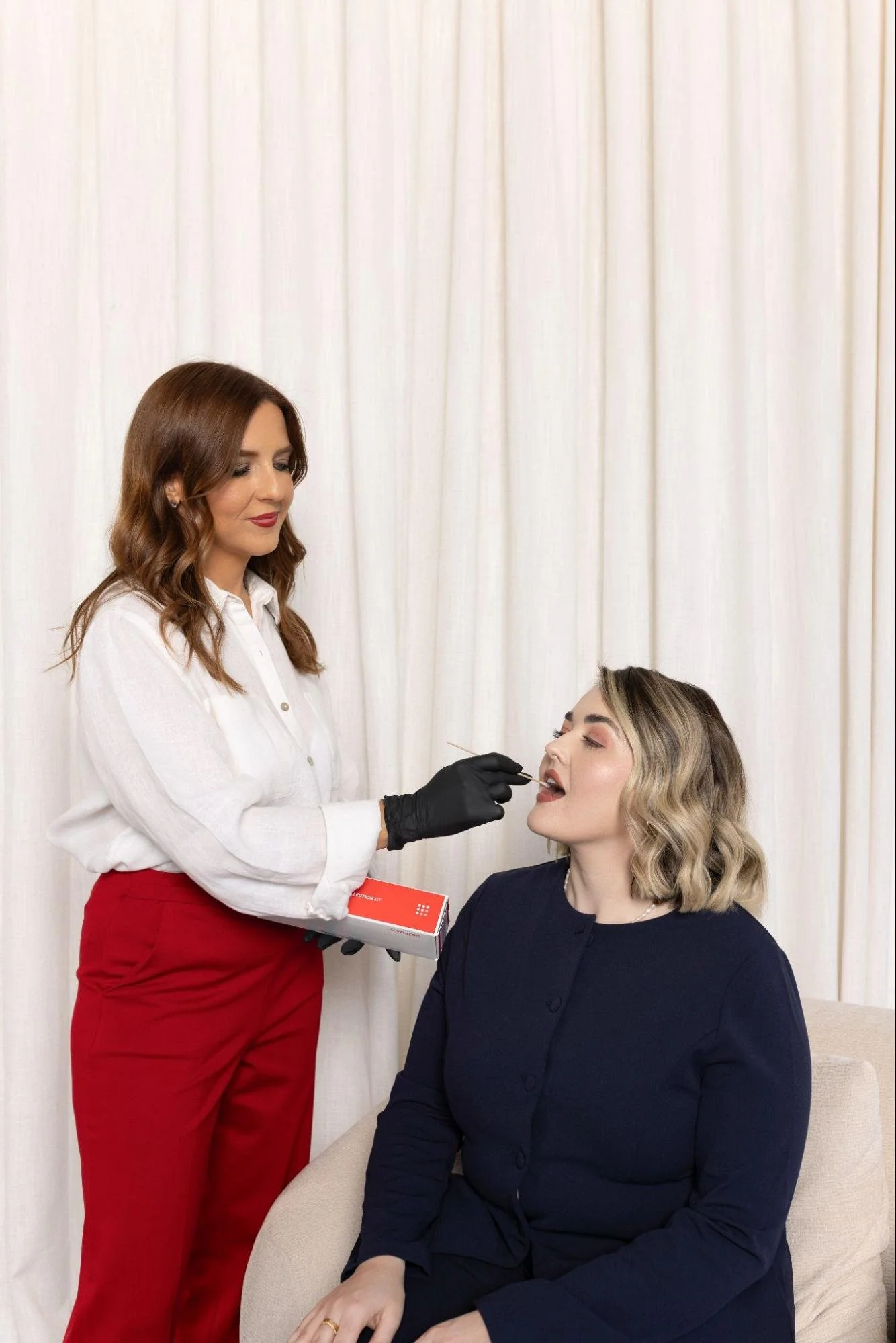
At NHLMA, we may also recommend our non-invasive, top-recommended genetic saliva test for hair loss. The test analyzes genetic markers associated with hormone sensitivity, follicle growth cycles, nutrient metabolism, inflammation, and treatment responsiveness. These insights can help us understand whether your hair loss has a strong genetic or DHT-driven component and whether minoxidil is likely to work best alone or as part of a broader plan that also addresses the underlying cause of miniaturization.
Genetic testing cannot guarantee that minoxidil will work or replace a medical evaluation. It gives our providers another layer of information to interpret alongside your scalp findings, lab results, health history, and previous treatment response.
Because low-dose oral minoxidil is an off-label hair-loss treatment that works throughout the body, we also review blood pressure, resting heart rate, cardiovascular and kidney history, current medications, pregnancy plans, and any history of swelling or fluid retention. When oral minoxidil is prescribed, the dose and follow-up plan are selected for the individual rather than taken from a standard protocol.
This process helps us answer more than whether oral or topical minoxidil is more convenient. It helps us determine whether minoxidil is appropriate for you, which form makes the most sense, what dose can be used safely, and whether another treatment should be included to address the biological driver of your hair loss.
At NHLMA, the model is simple: test first, then treat. Learn more about genetic saliva testing and how hair follicle and laboratory testing can help uncover the potential causes of hair loss.
Is It Right for You?
Oral minoxidil tends to make the most sense for people who have struggled with adherence to the topical version, experienced scalp irritation from topical solutions, or simply want a more convenient daily routine. It is not automatically the better option for everyone, particularly for those with a cardiovascular history who may require closer monitoring.
That is exactly why this decision benefits from a real conversation rather than an online order. Schedule a consultation with our hair loss experts virtually or in person at our Scottsdale clinic, or read our full comparison of minoxidil and finasteride if you are still weighing your treatment options.
Frequently Asked Questions
Is oral minoxidil safer than topical minoxidil?
Not necessarily safer, just differently risky. Oral minoxidil trades scalp irritation for a higher chance of unwanted body hair growth and requires cardiovascular monitoring that topical use does not.
How long before I see results with oral minoxidil?
Similar to the topical version, most people need three to four months before noticing reduced shedding and four to six months before visible regrowth.
Can I switch from topical to oral minoxidil?
Yes, many people do, typically under provider guidance to determine an appropriate starting dose.
Do I still need finasteride if I take oral minoxidil?
They work through different mechanisms and are often used together. Minoxidil supports growth while a DHT blocker like finasteride addresses the underlying hormonal driver, which is covered in our finasteride comparison guide.

Written by the Hair Loss Experts at NHLMA
Founded in 2007, National Hair Loss Medical Aesthetics is the leading Scottsdale based practice specializing in hair restoration and scalp health science.
The team combines functional medicine, advanced diagnostics, and the latest regenerative treatments to address hair loss at its root cause through a clinical, evidence based approach, not guesswork or one size fits all solutions.