Vitamin D and Hair Loss: The Connection Explained
If you've been dealing with thinning hair and still searching for the reason, your vitamin D levels might be worth a closer look. This is one of the most overlooked root causes we see at NHLMA, and once you understand how it works, the path forward becomes so much clearer.
Let's break it down.

What Vitamin D Actually Does for Your Hair
Think of vitamin D as a signal your hair follicles depend on to do their job. It plays a direct role in the creation of new hair follicles and helps regulate the hair growth cycle from start to finish. When your body has adequate levels, your follicles can move through the growth (anagen), rest (catagen), and shedding (telogen) phases the way they're designed to. When levels drop too low, that cycle gets disrupted.
Vitamin D also supports the health of keratinocytes, the cells responsible for producing keratin, the protein your hair is literally made of. Without enough vitamin D, those cells struggle to function properly, and the result often shows up as diffuse thinning, excessive shedding, or hair that just feels weaker than it used to.
The Research Behind It
The science here is compelling.A 2024 systematic review and meta-analysis found that vitamin D deficiency was present in roughly half of all patients across multiple hair loss conditions: about 52% of those with alopecia areata, 50% of women experiencing female pattern hair loss, 47% of men with androgenetic alopecia, and over 53% of patients with telogen effluvium.
Those numbers are staggering when you consider how many people dealing with hair loss have never once had their vitamin D levels checked.
Studies have also shown that individuals with alopecia areata are two to seven times more likely to be deficient in vitamin D compared to those with healthy hair. And in cases of telogen effluvium, that widespread shedding that feels like your hair is falling out in handfuls, restoring vitamin D levels has been shown to support recovery.
More recent research published in 2025 and 2026 continues to reinforce what we've seen clinically: vitamin D receptor (VDR) signaling is essential for maintaining healthy hair follicle cycling. When that signaling breaks down due to deficiency, the follicle essentially loses its roadmap.
Why So Many People Are Deficient
Here's the thing. Vitamin D deficiency is incredibly common, and most people have zero idea their levels are low. Modern life has made it easy to fall short. We spend the majority of our time indoors. We wear sunscreen (as we should for skin health). We live in climates or latitudes where sun exposure is limited for months at a time.
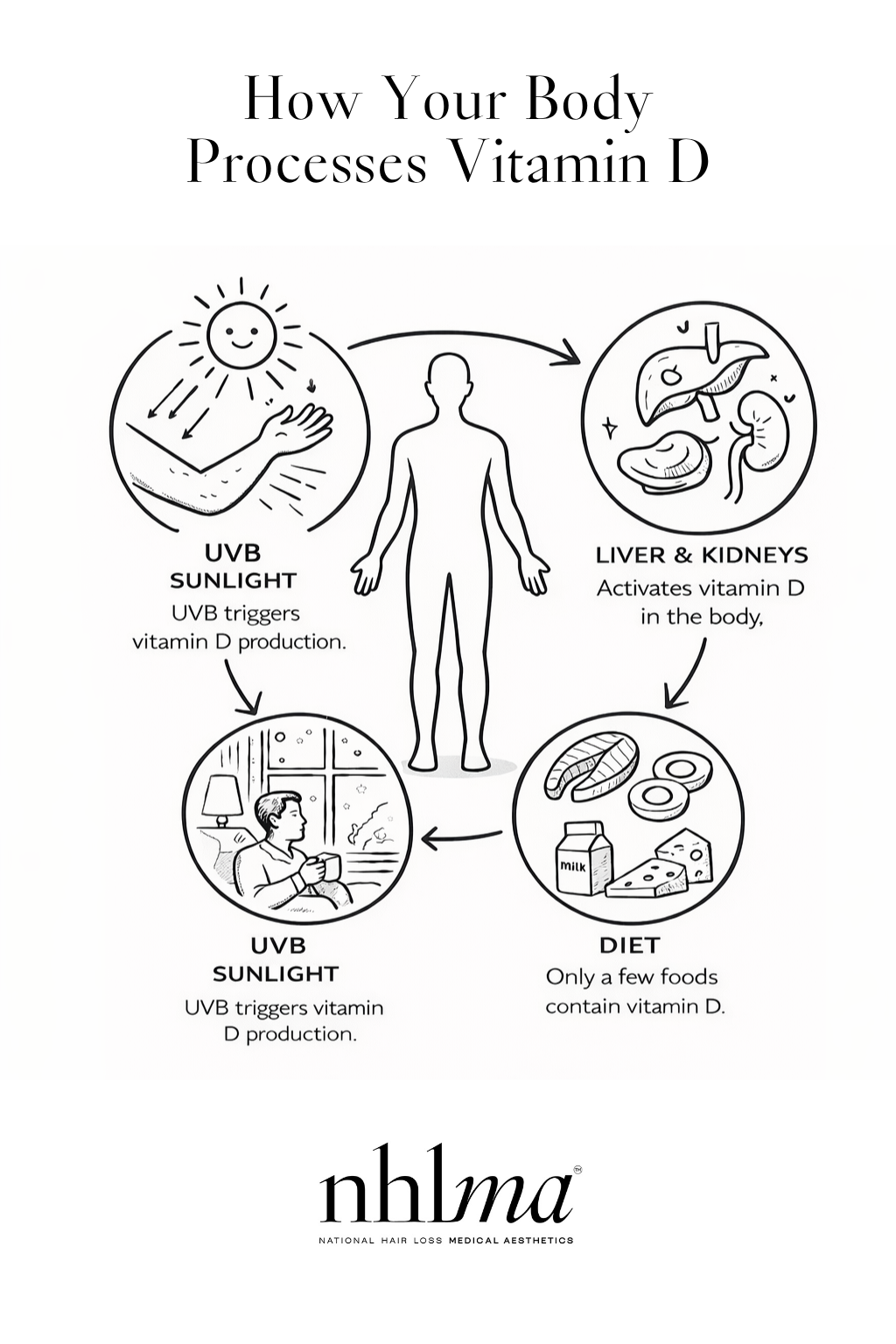
Your body produces vitamin D when your skin is exposed to UVB rays, but that process requires consistent, adequate sun exposure that most of us simply fall short on. Diet alone rarely provides enough either, since only a handful of foods (fatty fish, egg yolks, fortified dairy) contain meaningful amounts.
Add in factors like darker skin tones, age, gut health issues that impair absorption, and certain medications, and it becomes clear why deficiency rates are so high across the board.
Signs Your Hair Loss Could Be Linked to Low Vitamin D
Hair loss from vitamin D deficiency tends to look a little different from other types. Here's what to watch for:
Diffuse thinning across the entire scalp rather than in one specific area. Increased daily shedding that goes beyond the normal 50 to 100 hairs per day. Hair that grows back finer, weaker, or slower than before. A scalp that feels dry, tight, or irritated. Fatigue, muscle weakness, or mood changes alongside the hair loss, since vitamin D affects far more than just your hair.
If any of this sounds familiar, it's worth getting a simple blood test to check your 25-hydroxyvitamin D levels. Most experts consider levels below 30 ng/mL insufficient and below 20 ng/mL deficient.
What You Can Do About It
The encouraging news is that vitamin D deficiency is one of the more straightforward root causes to address once you know it's a factor. Here's where to start:
Get tested. A simple blood draw is all it takes. At NHLMA, we recommend this as part of a comprehensive evaluation for anyone experiencing hair loss, because understanding what's happening on the inside is just as important as what we can see on the outside.
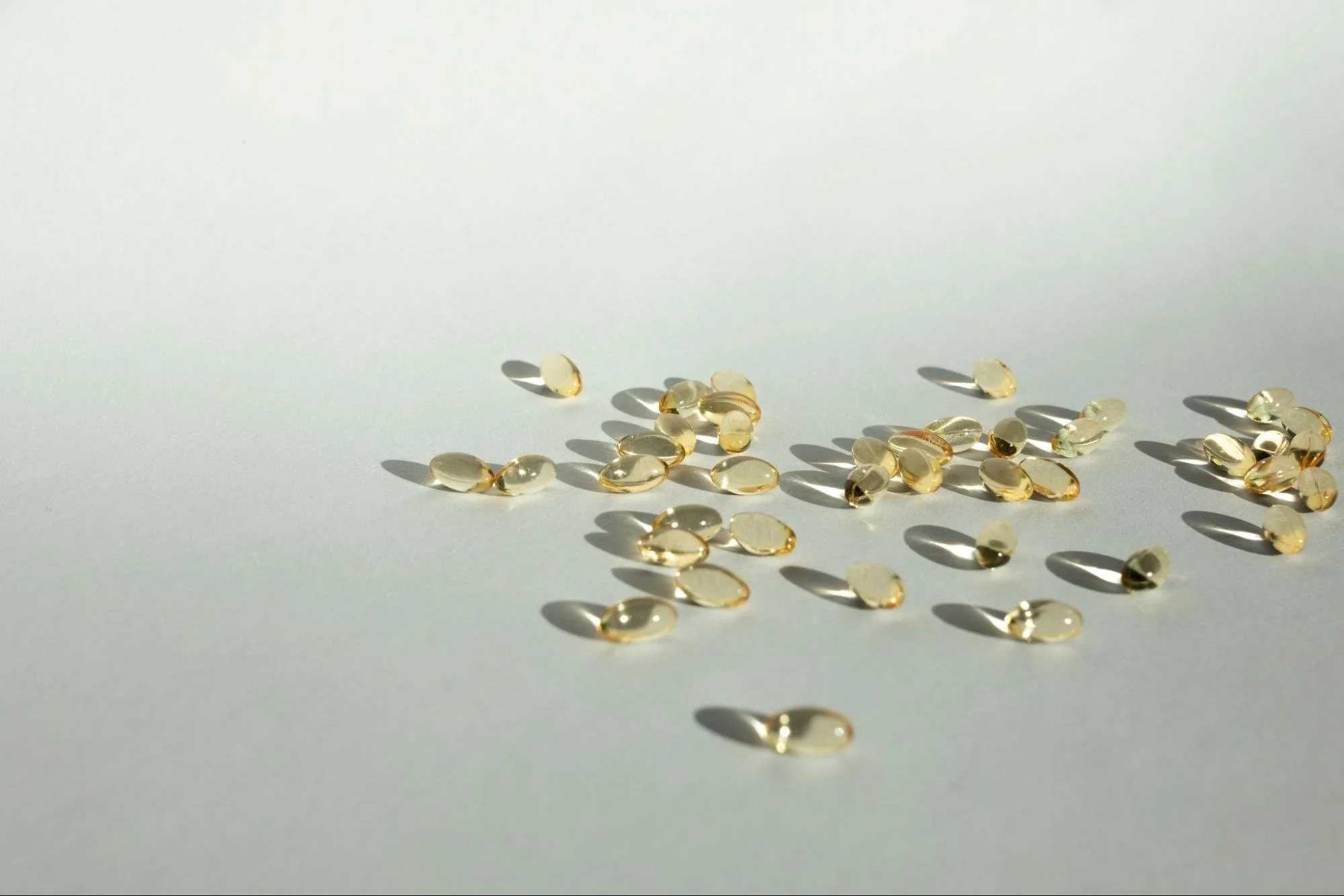
Supplement wisely. Vitamin D3 is the most bioavailable form, and pairing it with vitamin K2 helps ensure proper calcium metabolism. The Body Health Vitamin D3 + MK7 was formulated with exactly this in mind, delivering the nutrients most people are deficient in, in the forms your body can actually use.
Support absorption. Vitamin D is fat-soluble, so taking it with a meal that contains healthy fats makes a real difference. And if you have gut health concerns, addressing those will help your body absorb and utilize the vitamin D you're taking in.
Prioritize safe sun exposure. Even 10 to 15 minutes of midday sun on your arms and face a few times per week can support your body's natural production (with usage of SPF of course). Balance is everything here.
The Bigger Picture
At NHLMA, we always say that hair loss is rarely about just one thing. Vitamin D is often one piece of a larger puzzle that might include hormonal shifts, stress, gut health, inflammation, or nutritional gaps. That's exactly why we dig deeper than surface-level solutions. Your hair is telling you something about what's happening inside your body, and listening to that message is where real progress begins.
If you've been struggling with thinning or shedding and feel like you've tried everything, consider whether your vitamin D levels have ever been part of the conversation. Sometimes the answer has been hiding in plain sight.
We're here at our hair loss clinic in Scottsdale, AZ when you're ready to find it.
Ready to get to the root of your hair loss? Book a consultation with our team and let's build a plan that's personalized to you.

Written by the Hair Loss Experts at NHLMA
Founded in 2007, National Hair Loss Medical Aesthetics is the leading Scottsdale-based practice specializing in the science of hair restoration and scalp health.
Our team of clinicians combines functional medicine, advanced diagnostics, and the latest regenerative treatments to address hair loss at its root cause. Through a clinical, evidence-based lens, not guesswork or one-size-fits-all solutions. We are not just writing about this. It is what we do every day.