Laser Cap vs. Medical-Grade LLLT: What Actually Works for Hair Growth?
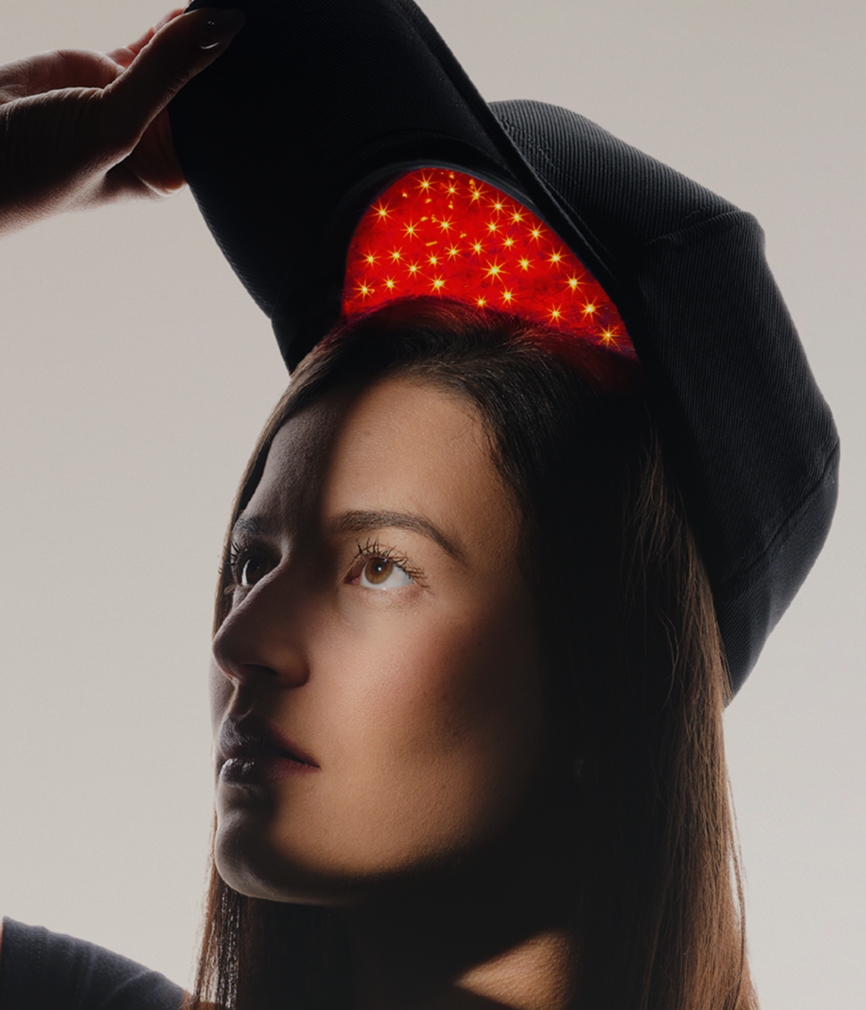
If you've been searching for at-home laser caps, you're not alone. At-home devices have become one of the most talked-about options for treating hair thinning, and unlike a lot of hair-loss trends, this one has real clinical research behind it.
At NHLMA in Scottsdale, we use primarily use an at-home laser caps vs. an in-clinic medical laser treatment for our patients. The right choice depends on where you're starting from.
What is LLLT for hair loss?
LLLT (low-level laser therapy) uses red and near-infrared light to stimulate the scalp at the cellular level.
The light penetrates the mitochondrial wall of your cells and triggers the release of nitric oxide, which allows more oxygen in and boosts ATP (energy) production. That extra cellular energy translates to increased blood flow to the follicles, an extended hair growth phase, and thicker, stronger strands over time.
Learn more about medical grade laser therapy here.
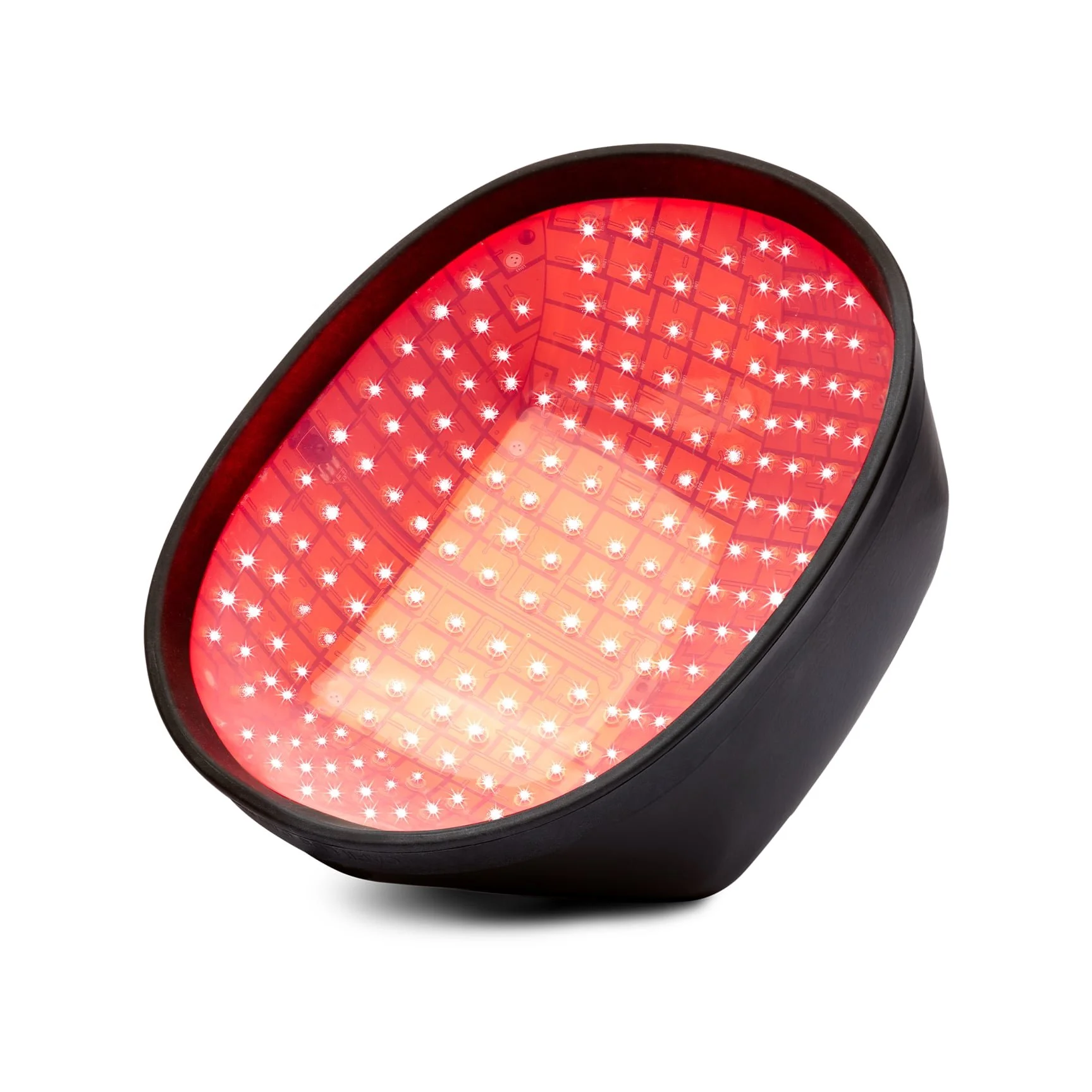
Laser Cap for Hair Loss at Home
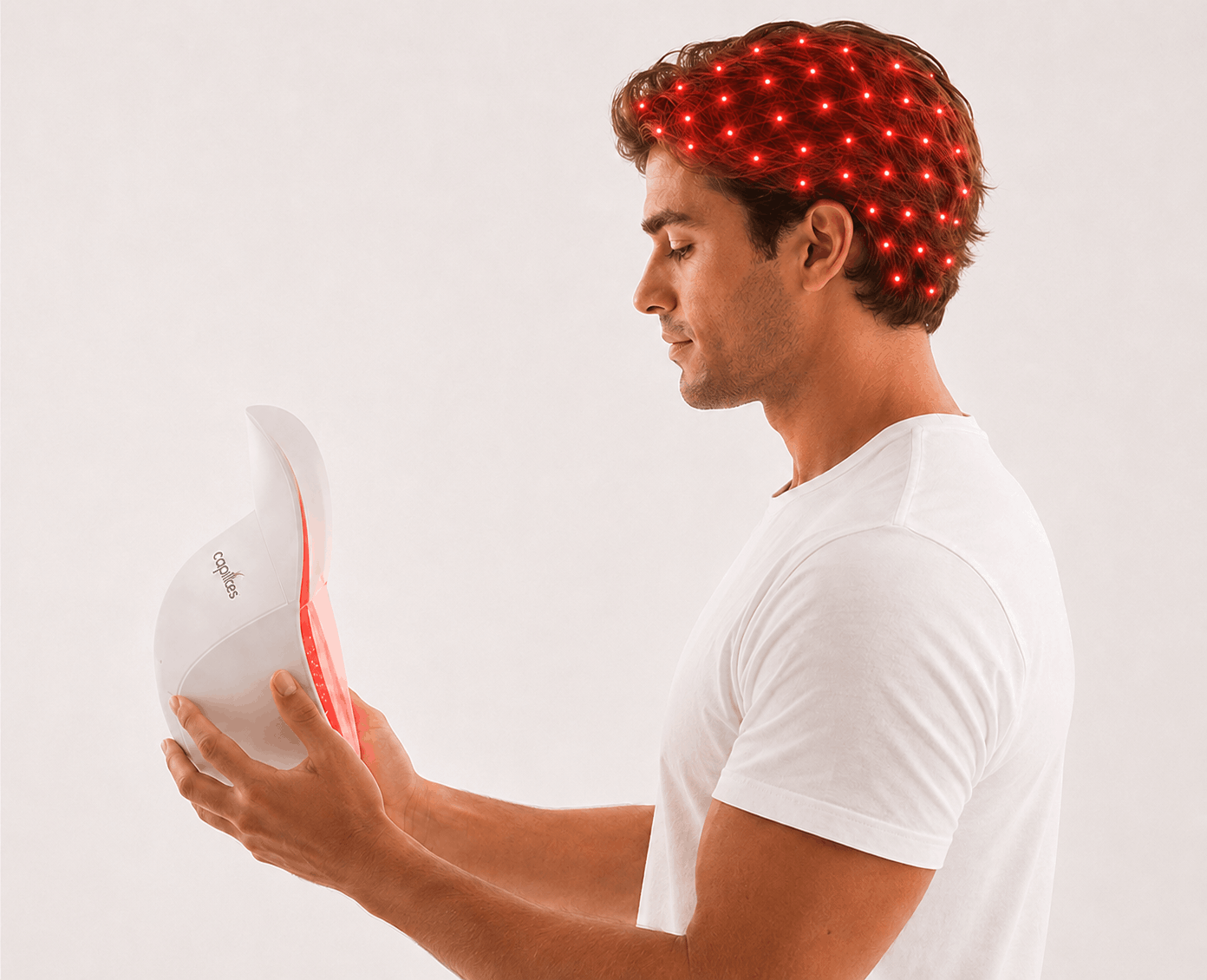
A laser cap, like our RX Duo, is a wearable device that delivers light evenly across the scalp in a 6-minute daily session.
The research behind this category is more substantial than most people realize: a 2024 meta-analysis pooling 7 double-blind, sham-controlled RCTs (607 participants total) found statistically significant increases in hair density across FDA-cleared home devices. Individual results varied by device — one diode-based cap study showed a 63.67% increase in terminal hair count at 17 weeks (versus 12.48% for sham treatment), while a helmet-style device showed increases of 35% in men and 37% in women. The RX Duo combines both wavelengths shown to matter most in this research (650nm and 808nm) across 320+ medical-grade diodes.
WHAT TO KNOW:
Easy to use and consistent — 6 minutes a day
Backed by multiple double-blind clinical trials, not just anecdote
Best suited for early-to-moderate thinning, maintenance, and as an ongoing complement to clinical treatment
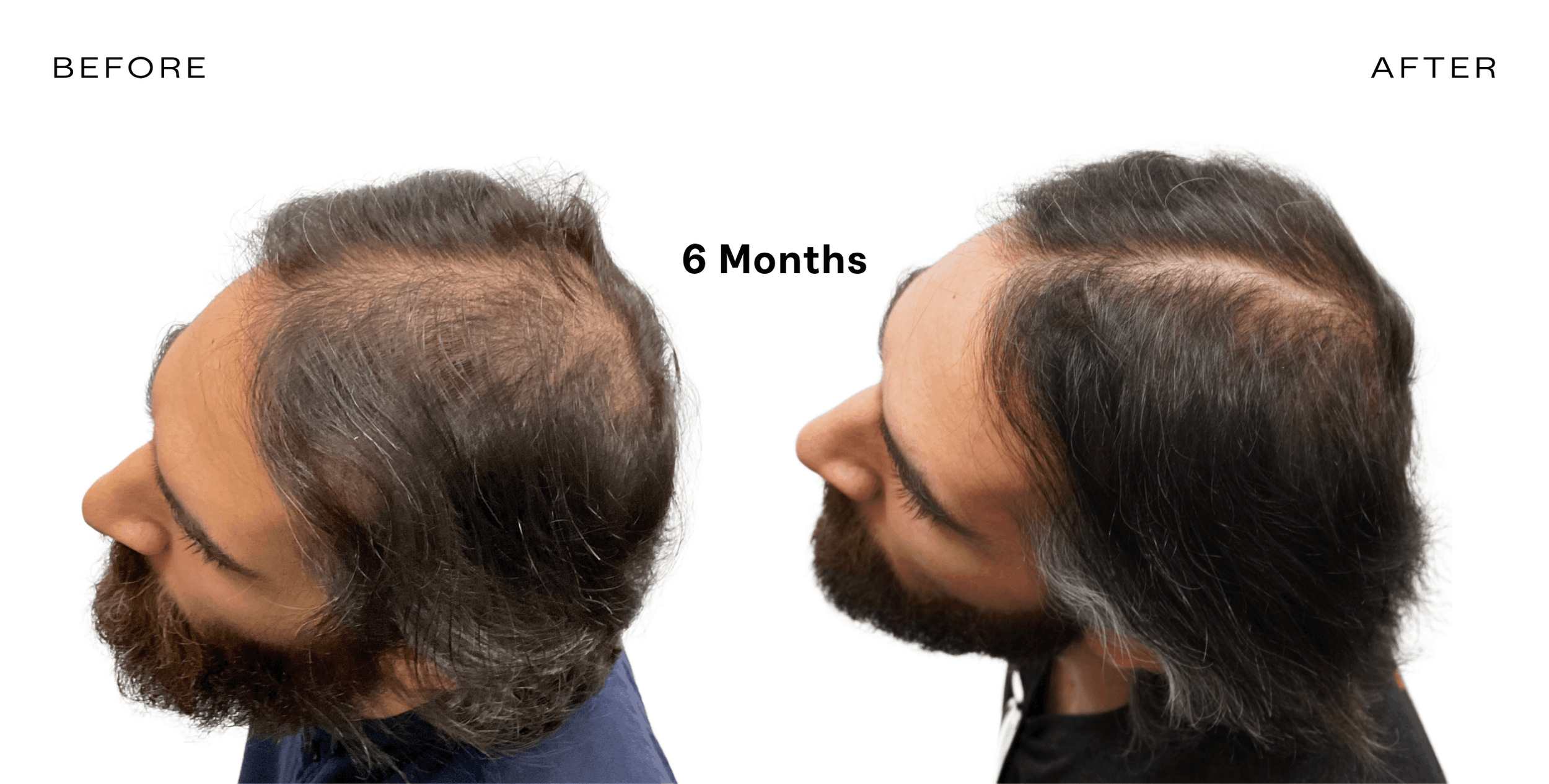
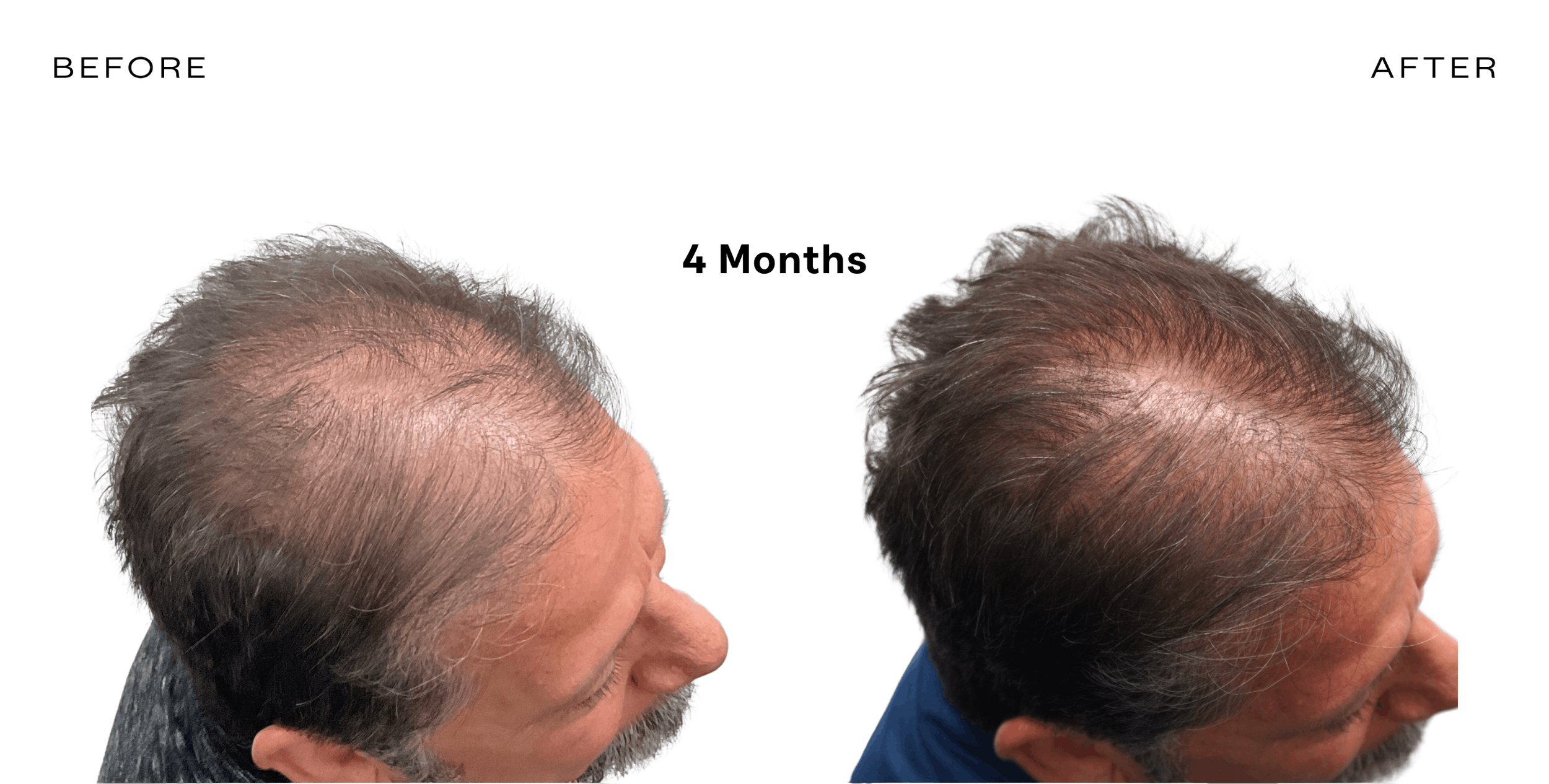
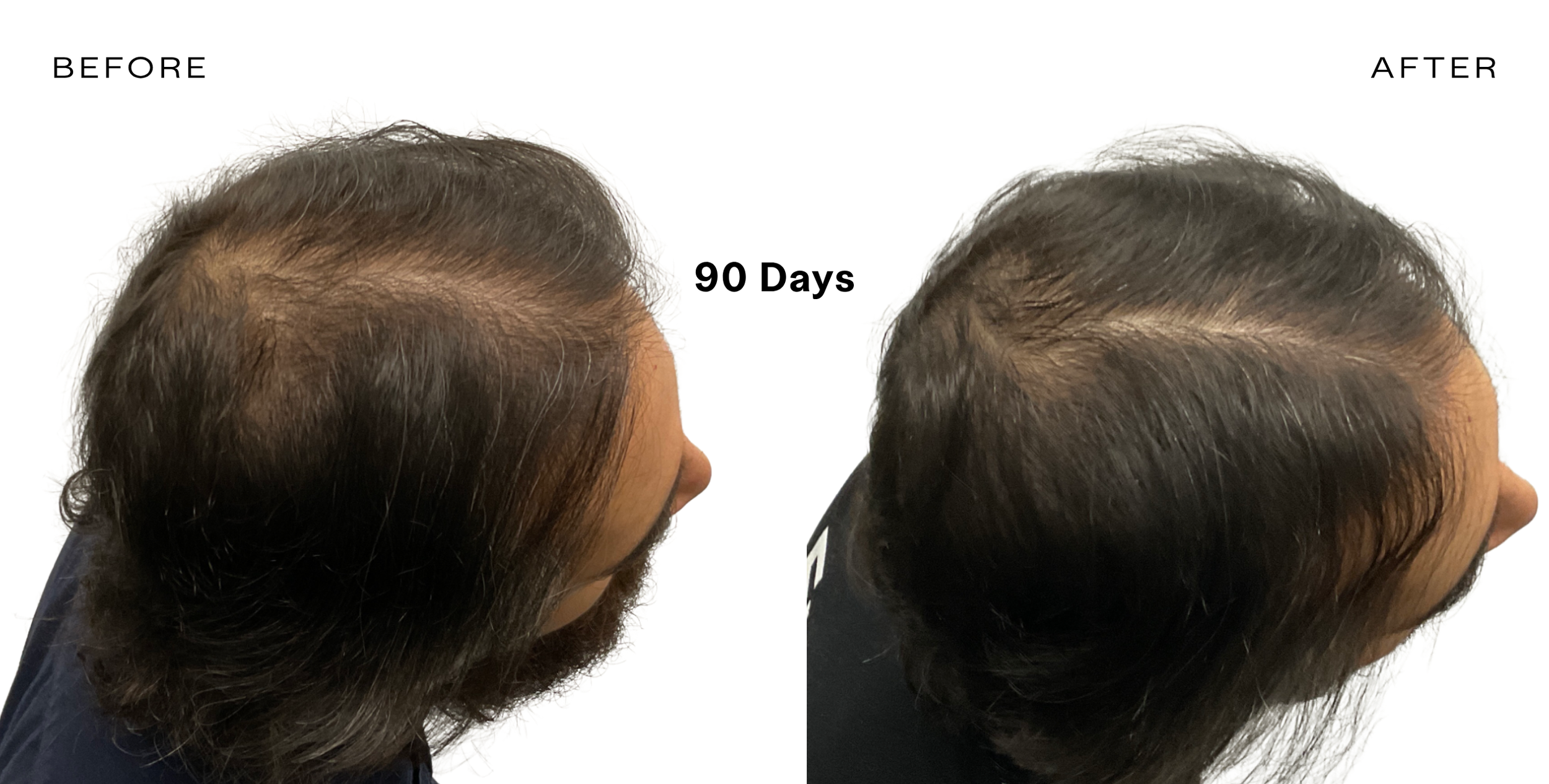
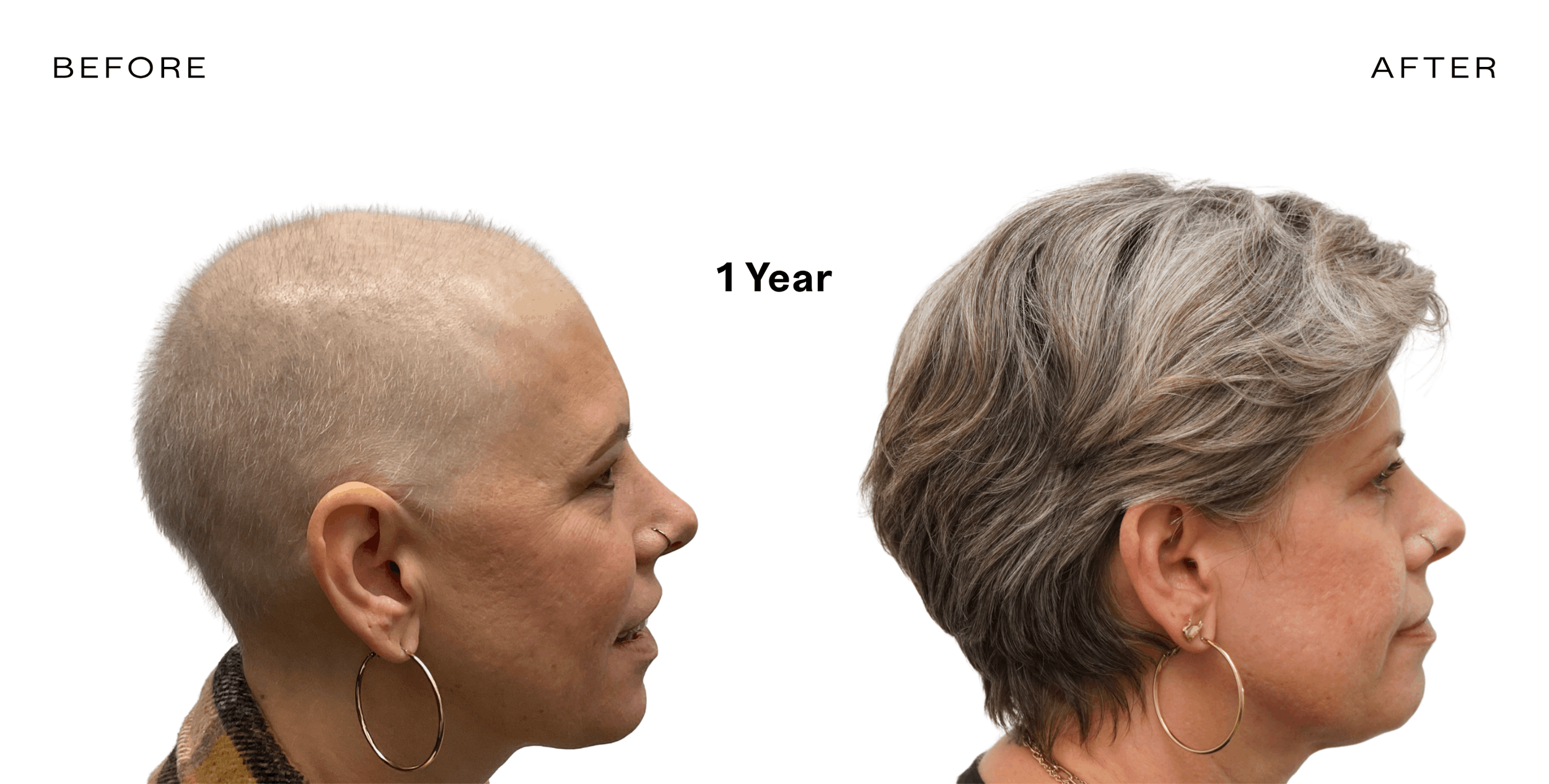
NHLMA Patient Results for RX Duo Hair Loss Laser Cap
Medical-Grade LLLT (In-Clinic)
Medical-grade LLLT uses higher-powered devices in a clinical setting, guided by our providers and often combined with treatments like PRP or regenerative therapies as part of a personalized plan. It's designed for more advanced thinning or for patients who want a provider actively managing their protocol.
What makes it different:
Higher-powered and more consistent
More targeted to areas of thinning
Guided by medical professionals
Often combined with treatments like PRP or regenerative therapies
Which one is right for you?
These aren't competing options, they're different tools for different stages.
RX Duo is a true daily solution on its own and a core part of our bestselling hair loss programs, not just a bridge between clinic visits. Many patients also pair it with exosomes, secretomes, or PRP in-clinic for added support, since the clinical research on LLLT consistently shows that regular, sustained use over months is what drives results.
Choosing a protocol
RX Duo At-Home Laser Cap vs. Medical-Grade LLLT (In-Clinic)
| RX Duo (at home) | Medical-grade LLLT (in-clinic) | |
|---|---|---|
| Best for | A true daily solution for hair loss, not just a maintenance step — central to our bestselling hair loss programs | Moderate-to-advanced thinning, post-transplant support |
| Setting | At home, on your own schedule | In-clinic, provider-guided |
| Session | 6 minutes daily | Longer, scheduled sessions |
| Often paired with | Topicals (melatonin, minoxidil), PRP, exosomes & other in-clinic regimens — a core treatment in our bestselling hair loss programs | PRP, exosomes & personalized regimens, often built around RX Duo as the daily foundation of the plan |
| Evidence base | 7 double-blind RCTs, 607 participants, FDA-cleared home devices | Higher-powered clinical devices, provider-monitored protocols |
Source: 2024 systematic review and meta-analysis of double-blind RCTs on FDA-cleared home-use low-level laser devices for pattern hair loss. RX Duo is a core treatment in our bestselling hair loss programs, and is also used alongside medical-grade LLLT in-clinic for patients pursuing both.
So what is the most optimal laser device for hair growth?
The truth is, there isn’t one single laser device for hair growth that works for everyone.
At-home devices can be helpful if:
your thinning is mild to moderate
you’re looking to maintain results
you want something easy to stay consistent with
But if your goal is noticeable regrowth, density, and long-term improvement, medical-grade LLLT will deliver more meaningful results.
Why LLLT Alone Isn’t Always Enough
Hair loss is rarely caused by just one factor. It often involves hormones, genetics, inflammation, and scalp health. That's why we rarely recommend LLLT (at-home or in-clinic) as a standalone fix. It works best as part of a plan built around what's actually driving your hair loss.
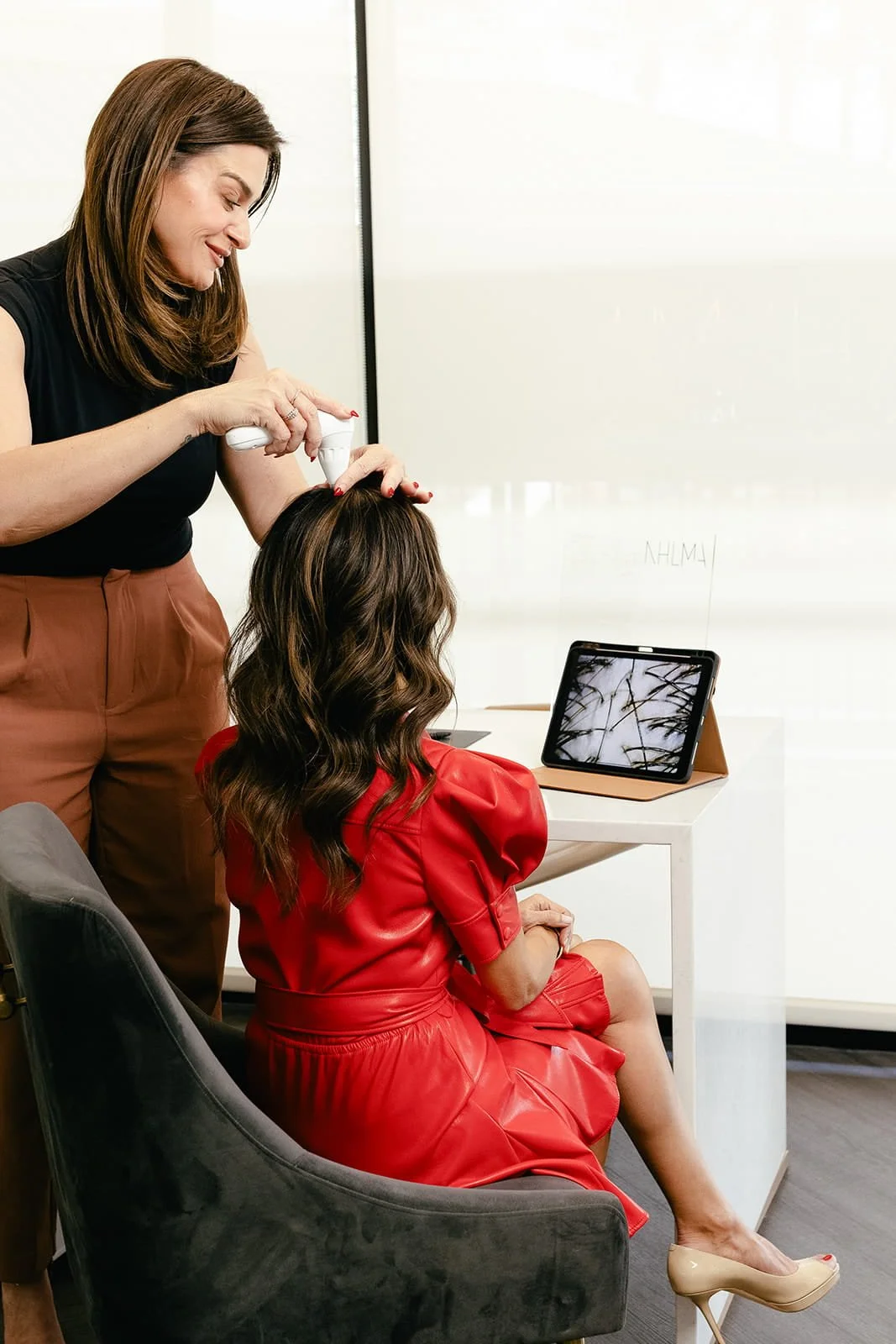
Want to know what will actually work for your hair?
If you’re deciding between a laser cap and medical-grade treatment, the best next step is a consultation.
We’ll help you understand:
what stage of hair loss you’re in
what treatments will actually move the needle
how to build a plan that supports real growth
Book a consultation with one of our hair loss experts in Scottsdale or virtually to get a personalized hair restoration plan.
Frequently Asked Questions
Is an at-home laser cap as effective as in-clinic LLLT?
Yes. For most patients, the RX Duo is a true daily solution on its own, and it's central to our bestselling hair loss programs. For more advanced thinning, pairing it with in-clinic treatment can add even more support.
How long until I see results?
Clinical trials on FDA-cleared devices generally measured results at 16–26 weeks of consistent use. Expect to give it at least 3–6 months.
Can I use a laser cap alongside minoxidil or other treatments?
Yes. In the studies with the strongest results, LLLT was often used alongside other treatments, not as a replacement for them.

Written by the Hair Loss Experts at NHLMA
Founded in 2007, National Hair Loss Medical Aesthetics is the leading Scottsdale-based practice specializing in the science of hair restoration and scalp health.
Our team of clinicians combines functional medicine, advanced diagnostics, and the latest regenerative treatments to address hair loss at its root cause. Through a clinical, evidence-based lens, not guesswork or one-size-fits-all solutions. We are not just writing about this. It is what we do every day.