
Dutasteride vs. Finasteride: The Stronger DHT Blocker, Explained
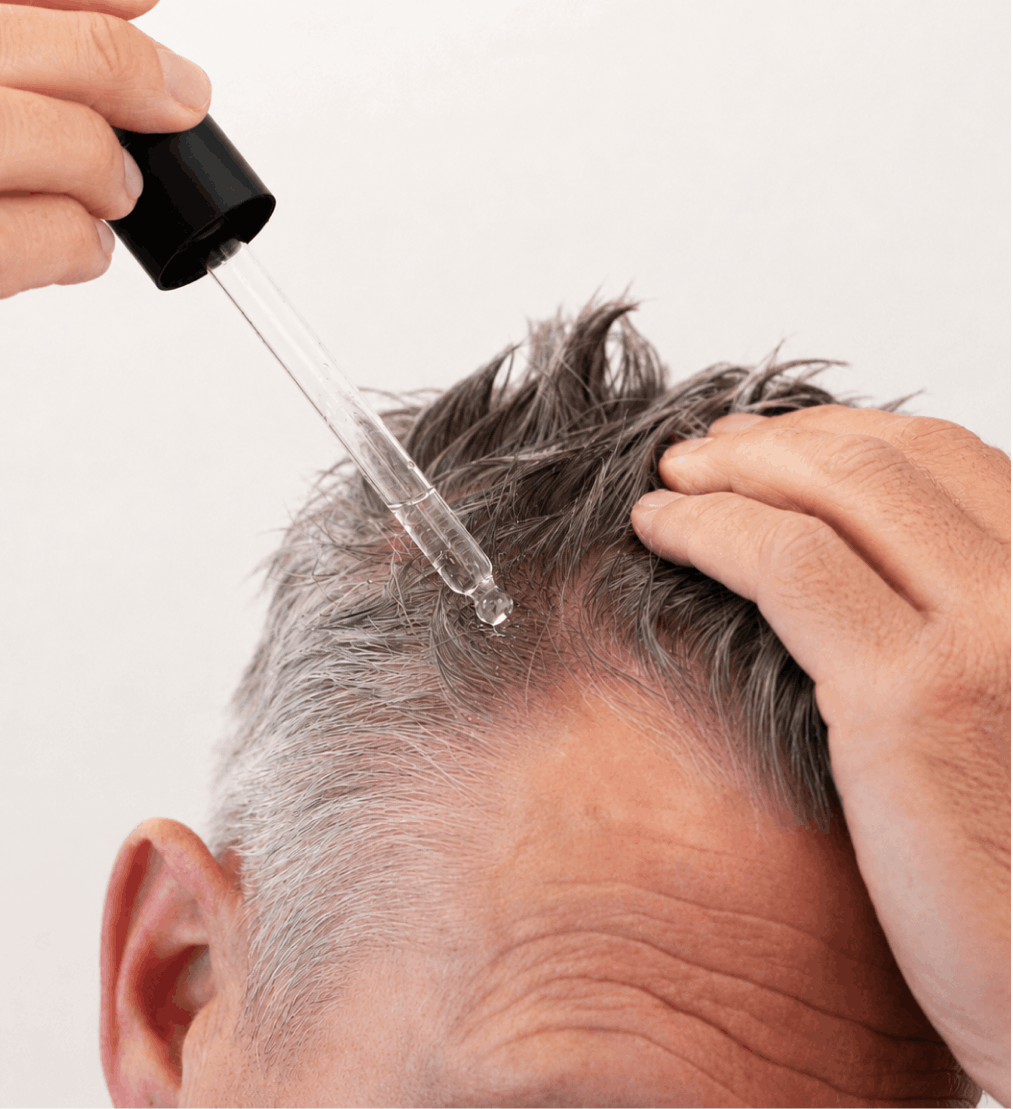
If finasteride has slowed your hair loss but hasn't given you the results you hoped for, dutasteride is probably the next question on your mind. Here is how the two actually compare.
If you have spent any time researching hair loss treatment, you already know finasteride. It is one of the most prescribed medications for androgenetic alopecia, and for good reason. But if you have been on it for a while, or you have read that a second medication called dutasteride works even better, you are probably wondering what the real difference is, and whether switching makes sense for you.
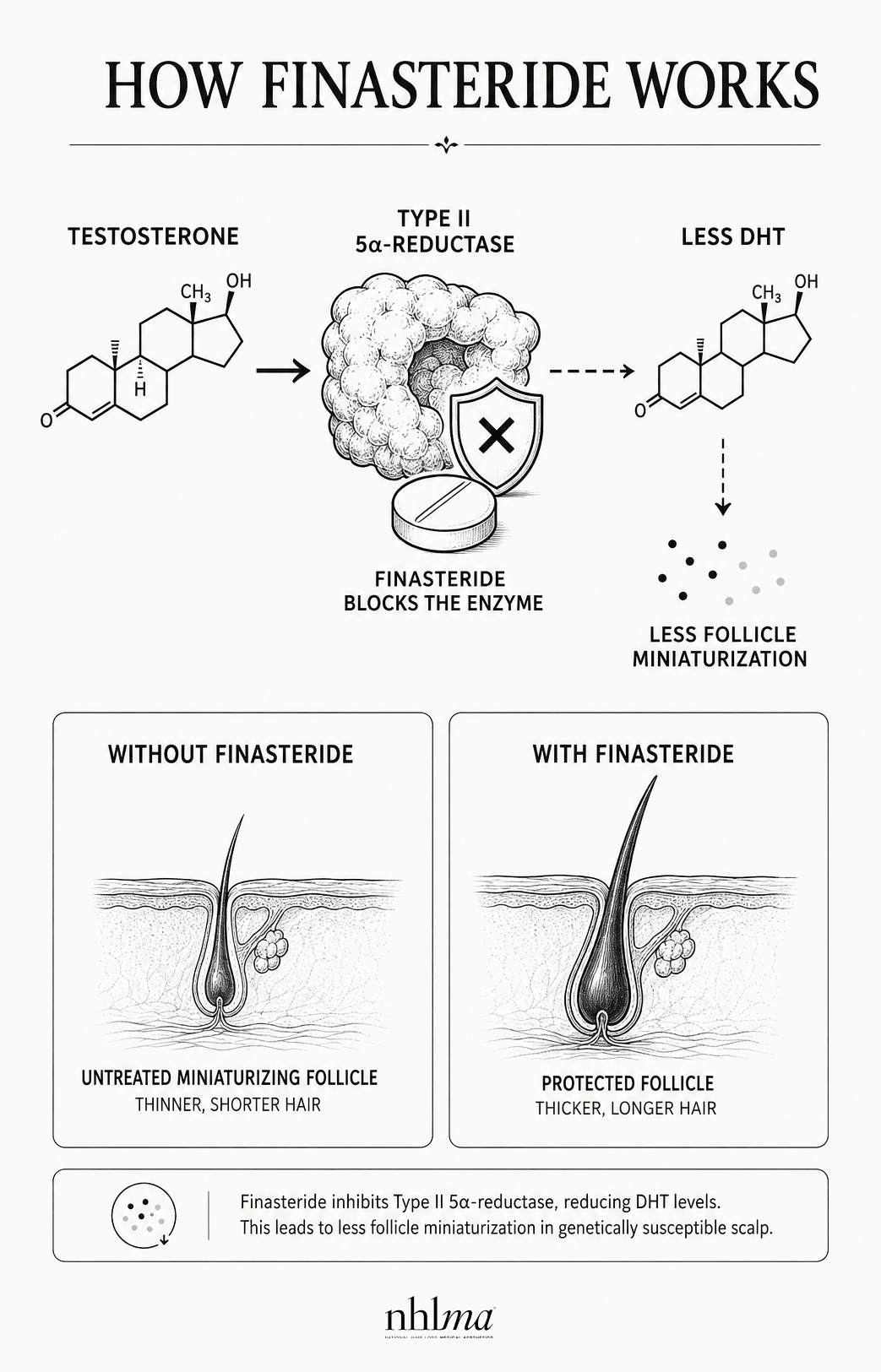
How Finasteride Works, a Quick Refresher
Finasteride blocks Type II 5 alpha reductase, the enzyme responsible for converting testosterone into dihydrotestosterone, or DHT. DHT is the hormone that causes genetically susceptible hair follicles to shrink over time, a process called miniaturization. By reducing the amount of DHT reaching the follicle, finasteride slows or stops that process for most men who take it.
We cover the full picture, including cost and side effects, in our guide to minoxidil vs. finasteride.
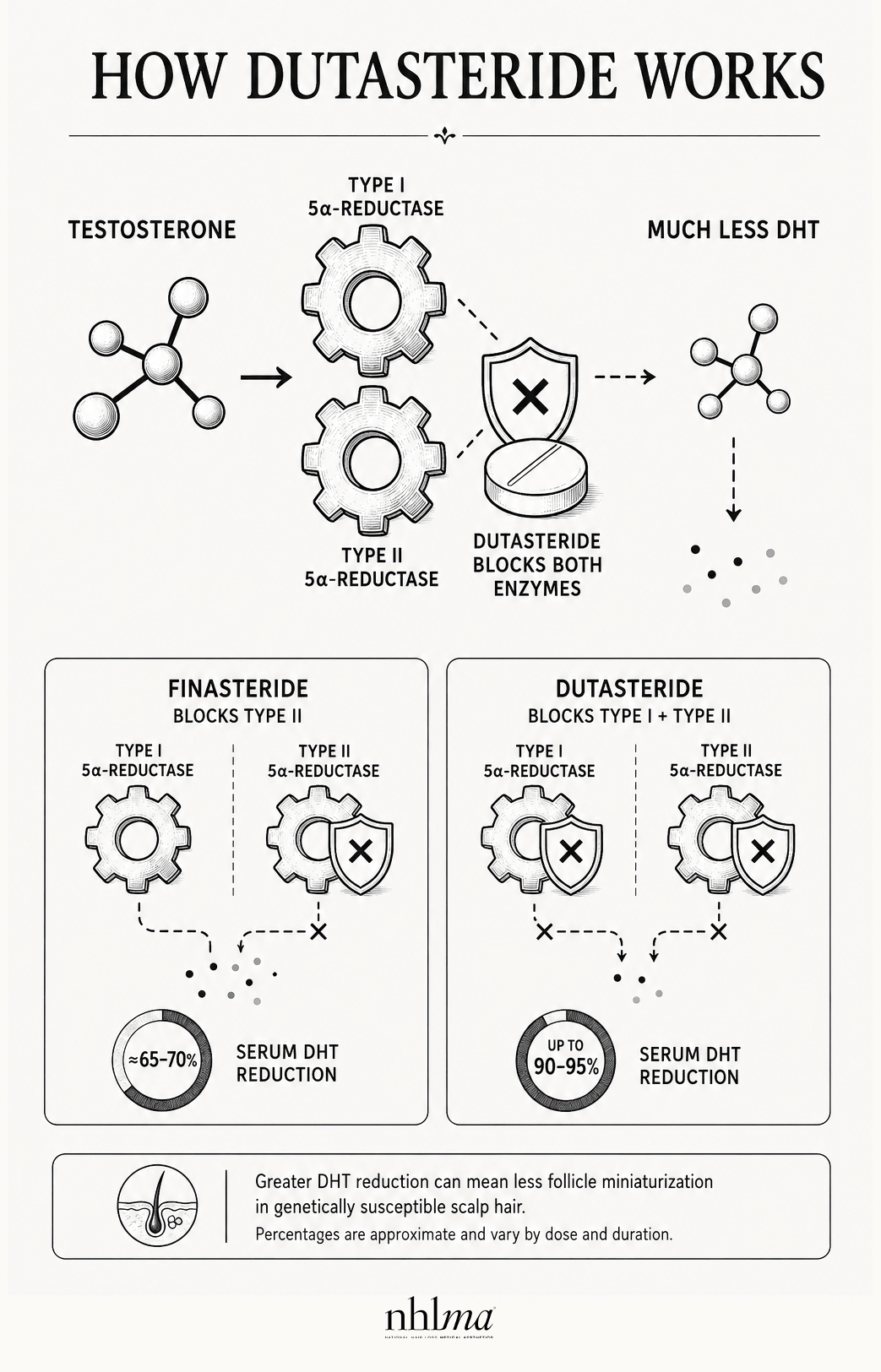
How Dutasteride Works, and Why It Is More Powerful
Dutasteride works on the same pathway, but more completely. There are two forms of the 5 alpha reductase enzyme in the body, Type I and Type II. Finasteride only blocks Type II. Dutasteride blocks both, which means it can suppress DHT by as much as 90 to 95 percent, compared to roughly 70 percent with finasteride at standard doses.
That difference sounds small on paper. In practice, it is often the reason someone who plateaued on finasteride sees renewed progress after switching, and why some clinicians reach for dutasteride first in men who present with more advanced hair loss.
What the Research Actually Shows
The most cited head to head comparison remains a randomized, placebo controlled trial that measured total hair count in men using dutasteride at several doses against finasteride and placebo. The study found that dutasteride 0.5 milligrams significantly outperformed finasteride 1 milligram on hair count improvement, and the effect held up across the follow up period. You can read the full study, published in the Journal of the American Academy of Dermatology, for the complete data set.
More recent research has also looked at whether dutasteride needs to be taken every day to work. A newer investigator blinded trial found that dutasteride taken two or three times a week performed comparably to daily finasteride, which is part of why microdosing and scalp mesotherapy protocols have become more common in clinical practice.
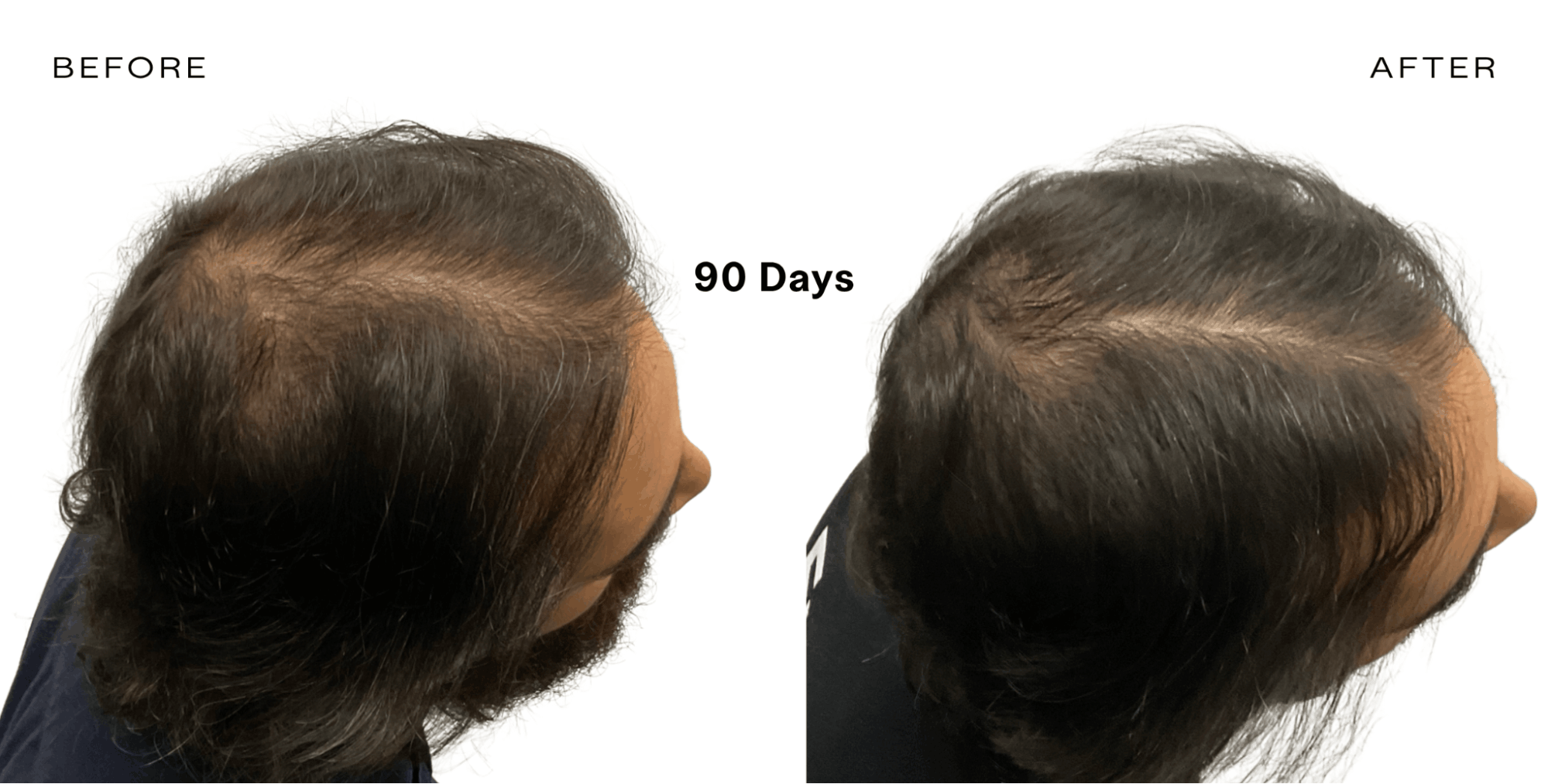
Our male patient was on 90 Days of Laser Therapy, Minoxidil, and Finasteride.
Side Effects, and the One Difference That Actually Matters
Both medications carry a similar, low risk of sexual side effects, generally reported in the 2 to 4 percent range, including reduced libido or erectile difficulty. Most men tolerate either medication without issue, and side effects typically resolve once the medication is stopped.
The meaningful difference is timing. Finasteride has a short half life and clears the body within a day or two. Dutasteride has a half life of roughly five weeks, so if a side effect does appear, it can take significantly longer to fully resolve after stopping. That is worth knowing before you start, not after.
Is Dutasteride Right for You?
Finasteride is FDA approved specifically for male pattern hair loss. Dutasteride is FDA approved for prostate conditions and is prescribed for hair loss off label, which is common and well supported in the dermatology literature, but it does mean the conversation about whether it is appropriate for you belongs in a real consultation, not a quick online order.
Good candidates are often men who have been on finasteride for six to twelve months without the results they expected, men with more advanced hair loss at the start of treatment, or men who want to explore lower frequency options like mesotherapy. It is not the automatic right answer for everyone, and a clinician who can review your history and current pattern of loss is the best person to make that call with you.
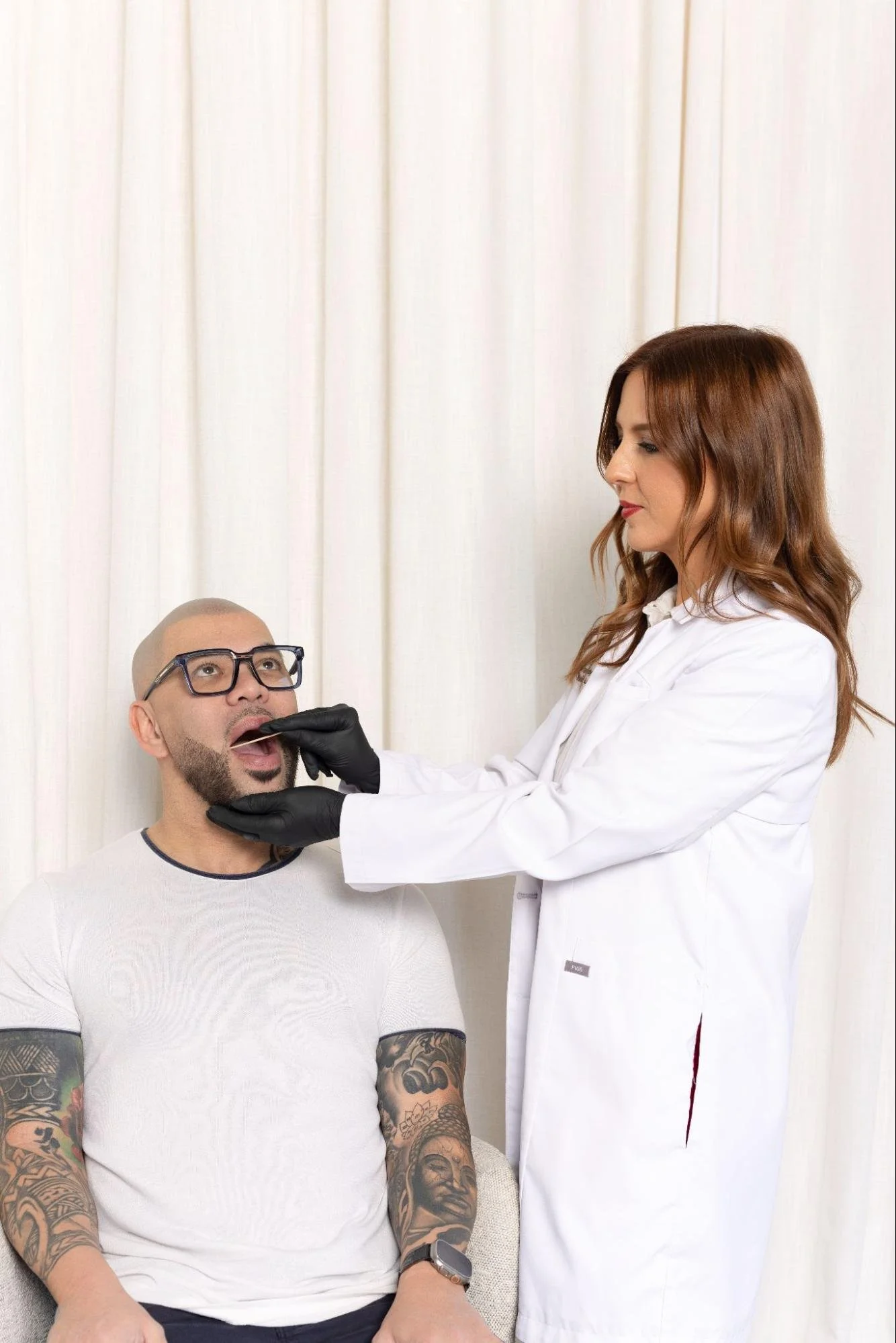
How NHLMA Decides Between Finasteride, Dutasteride, and Everything Else
Most hair loss clinics start patients on the same medication and wait months to see what happens. NHLMA starts with testing.
Our non-invasive genetic saliva test for hair loss analyzes genetic markers associated with hormone sensitivity and treatment responsiveness. For patients considering medications such as finasteride or dutasteride, these results can help us understand whether DHT is likely to be a significant driver of their hair loss and whether their genetic profile suggests they may be a stronger or weaker responder to a DHT-blocking medication.
Research on androgen receptor gene polymorphisms found a correlation between specific genetic variations and the degree of improvement patients experienced with finasteride. While genetic testing cannot guarantee an individual result, it gives our providers another valuable piece of evidence to consider before recommending a prescription—not after six months of waiting to find out whether it is working.
A scalp and follicle evaluation adds another important part of the picture by showing the degree and pattern of miniaturization present and helping us determine whether androgenetic alopecia—or another type of hair loss—is contributing to the changes you are seeing. Combined with comprehensive lab work, your medical history, and a professional scalp evaluation, genetic saliva testing allows us to build a plan around your specific biology instead of defaulting to a standard protocol.
The goal is not simply to choose between finasteride and dutasteride. It is to determine whether a DHT blocker makes sense for you in the first place, which option may be the best fit, and whether your plan should also include treatments such as minoxidil, spironolactone, nutritional support, regenerative therapies, or targeted scalp care.
You can learn more about NHLMA’s genetic saliva testing, which is available in our Scottsdale clinic or through an at-home testing kit.
Not sure whether dutasteride or finasteride is right for you? Book a consultation with one of our hair experts to explore the safest, most effective treatment plan for your specific type of hair loss.
Frequently Asked Questions
Can I switch directly from finasteride to dutasteride?
Many people do, under clinical supervision. Because dutasteride stays in the body much longer, your provider will want to talk through timing and what to expect during the transition.
Is dutasteride safe for long term use?
The available data on long term use is reassuring for most healthy men, but because it is prescribed off label for hair loss, ongoing monitoring is part of a responsible treatment plan.
Does dutasteride work for women?
It is occasionally used off label in select cases, but this requires careful evaluation given the reproductive risks associated with 5 alpha reductase inhibitors. This is a conversation to have directly with your provider.
How long before I see results with dutasteride?
Similar to finasteride, most people need three to six months before noticing reduced shedding, and six to twelve months for visible density changes.

Written by the Hair Loss Experts at NHLMA
Founded in 2007, National Hair Loss Medical Aesthetics is the leading Scottsdale-based practice specializing in the science of hair restoration and scalp health.
Our team of clinicians combines functional medicine, advanced diagnostics, and the latest regenerative treatments to address hair loss at its root cause. Through a clinical, evidence-based lens, not guesswork or one-size-fits-all solutions. We are not just writing about this. It is what we do every day.