
Postpartum Hair Loss: A Month by Month Recovery Timeline
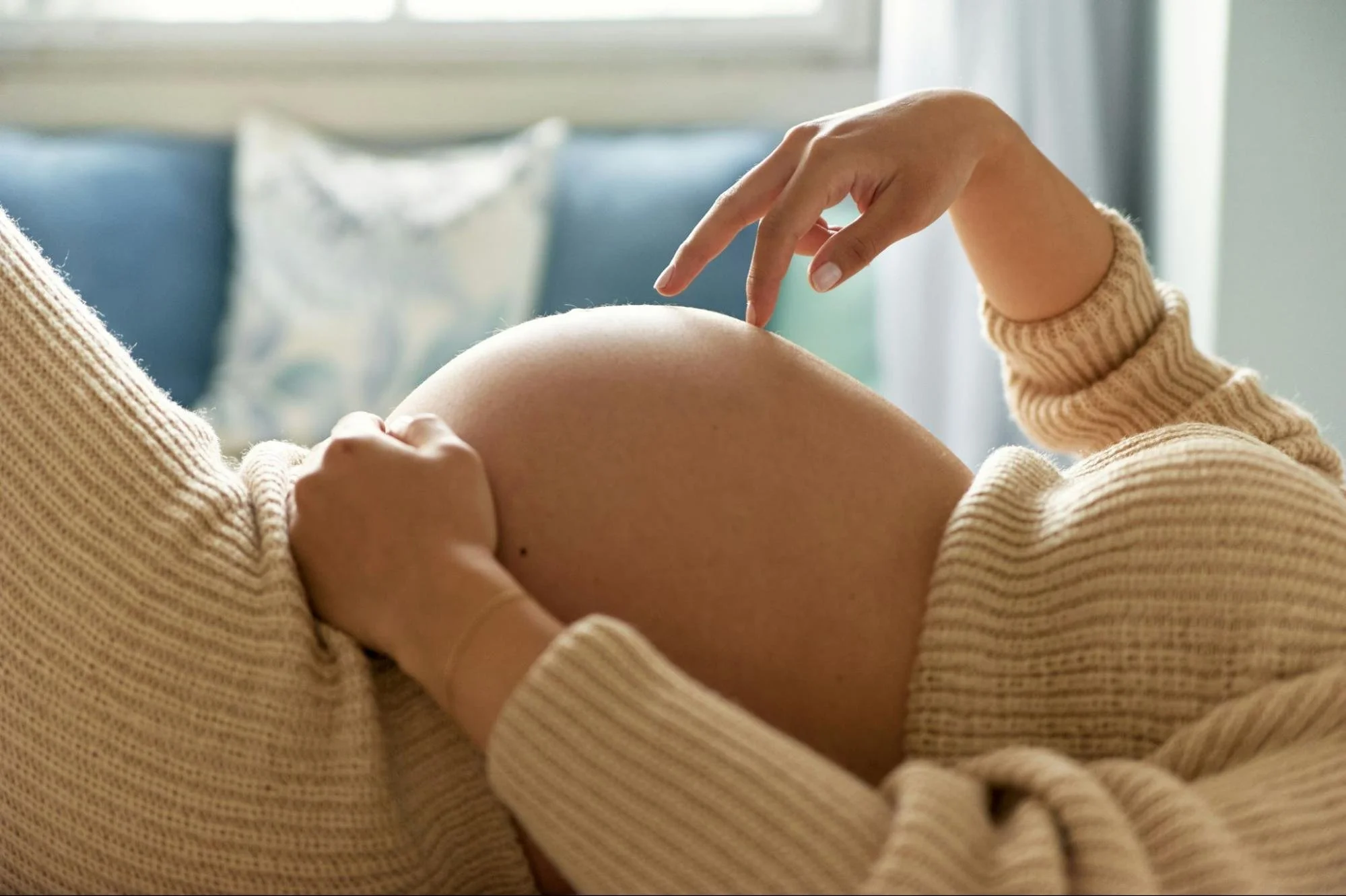
The clumps of hair in the shower drain a few months after having a baby are alarming, but for most new mothers, they follow a predictable and temporary pattern.
Somewhere around the three month mark after having a baby, a lot of new mothers have the same panicked moment in the shower. Handfuls of hair are suddenly coming out, the drain is clogging, and the brush looks like it belongs to someone else. If this is happening to you, take a breath. In the vast majority of cases, this is postpartum telogen effluvium, and it is temporary.
Why It Happens
During pregnancy, elevated estrogen keeps a larger than normal percentage of your hair follicles in the active growth phase, which is why many women notice their hair feeling unusually thick and full throughout pregnancy. After delivery, estrogen drops sharply, and all of those follicles that were held in growth phase shift into the resting phase at once. A few months later, they fall out together, producing the sudden, dramatic shedding that catches so many new mothers off guard.
This mechanism, a large synchronized shift of follicles from growth phase into shedding phase, is what dermatologists call telogen effluvium, and pregnancy and childbirth are among its most common triggers. The NIH's clinical overview of telogen effluvium is a good technical reference if you want to understand the underlying biology.
A Realistic Month by Month Timeline
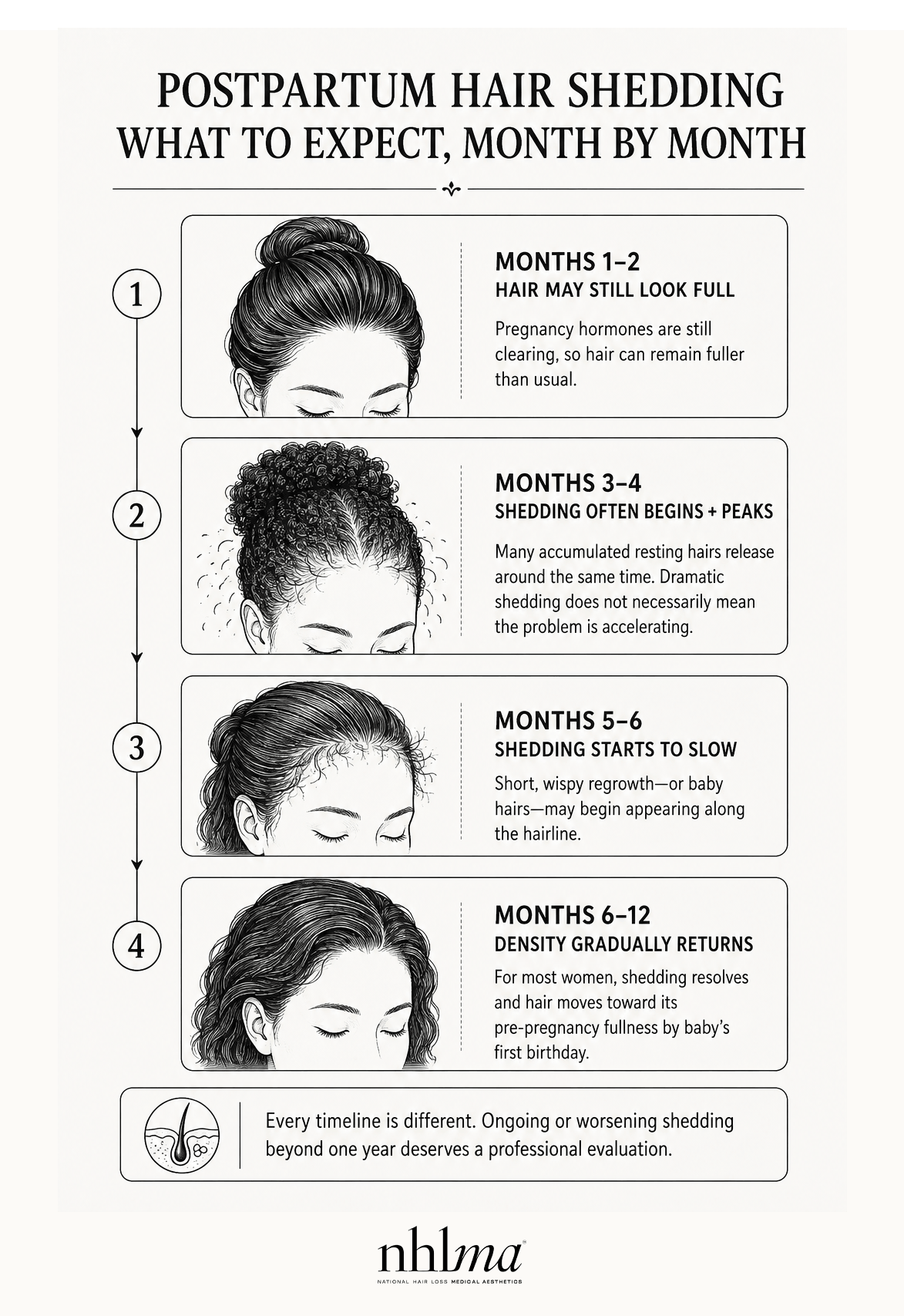
Months 1 to 2 postpartum: Hair often still looks full, sometimes even fuller than usual, as pregnancy hormones are still clearing your system.
Months 3 to 4 postpartum: This is when shedding typically begins and peaks. It can feel dramatic, and often is, but it reflects several months of accumulated follicles being released at once, not an accelerating problem.
Months 5 to 6 postpartum: Shedding usually starts to slow noticeably. Many women begin seeing short, wispy regrowth, sometimes called baby hairs, along the hairline.
Months 6 to 12 postpartum: For most women, shedding resolves and density gradually returns to its pre pregnancy baseline. Full regrowth by a baby's first birthday is a reasonable general expectation, though the exact timeline varies from person to person.
What Actually Helps
There is no medication that speeds up postpartum telogen effluvium, because it is a hormonal recalibration, not a deficiency or a disease process. What helps most is supporting the hair you have while your body finishes the transition: gentle styling that avoids added tension, a scalp friendly routine, and attention to sleep and nutrition as much as a newborn allows, since both affect the hair cycle broadly.
This is also a good window to have ferritin and thyroid levels checked. Postpartum iron depletion and postpartum thyroiditis are both common and can extend or worsen shedding beyond what estrogen withdrawal alone would cause. Our guides to iron deficiency and hair loss and vitamin D and hair loss cover what those labs should actually include.
When It Is Not Just Postpartum Shedding
Postpartum telogen effluvium should follow the general timeline above and trend toward improvement by month six. A few patterns are worth flagging to a provider rather than waiting out: shedding that is still worsening past month six, hair loss concentrated in one area rather than diffusely across the scalp, or a family history of pattern hair loss that this episode may have unmasked. Research on postpartum shedding has also found it can sometimes reveal underlying traction alopecia or other latent hair loss conditions that were not obvious before pregnancy, particularly in women who wear tight hairstyles.

How NHLMA Tests Postpartum Hair Loss
Postpartum shedding is usually temporary, but when it continues longer than expected, significantly changes your density, or causes a widening part, testing can help determine whether telogen effluvium is the whole story. At NHLMA, we do not assume every postpartum patient is experiencing hair loss for the same reason.
We begin with a detailed scalp and follicle evaluation to look at the pattern of shedding and identify signs of miniaturization. Diffuse shedding with otherwise healthy follicles often supports postpartum telogen effluvium, while progressive miniaturization or thinning concentrated around the part and hairline may suggest that pregnancy has revealed an underlying predisposition to androgenetic hair loss.

Comprehensive lab work helps us investigate internal factors that can prolong postpartum shedding. This may include a complete blood count, ferritin and a full iron panel, thyroid markers, vitamin D, B vitamins, zinc, hormone levels, and other biomarkers selected for your symptoms and health history. These results can reveal whether iron depletion, postpartum thyroid changes, nutritional deficiencies, or another internal stressor is interfering with recovery.

For patients with a family history of pattern hair loss or visible signs of miniaturization, NHLMA may also recommend our genetic saliva test for hair loss. This non-invasive test analyzes genetic markers associated with hormone sensitivity, follicle health, and treatment responsiveness. It can help us understand whether postpartum shedding may have uncovered a genetic susceptibility to DHT-driven hair loss and which treatments your biology may be more likely to respond to.
Genetic testing does not diagnose postpartum telogen effluvium or guarantee a particular treatment outcome. It adds another layer of insight that our providers interpret alongside your scalp evaluation, lab results, medical history, postpartum timeline, and breastfeeding status.
The goal is to determine whether your hair simply needs time to complete a normal postpartum reset or whether an identifiable issue is keeping it from recovering. From there, NHLMA can recommend reassurance and monitoring, correction of a deficiency, medical follow-up for a thyroid or hormonal concern, or a targeted hair-restoration plan that is appropriate for your current stage of postpartum recovery.
Learn more about genetic saliva testing and how hair follicle and laboratory testing can help uncover potential contributors to hair loss.
When to Come In
If you are past six months postpartum and still losing significant hair, if your part is visibly widening rather than filling back in, or if you simply want lab confirmation that nothing else is contributing, a full evaluation is the fastest way to get a real answer instead of waiting and wondering. Schedule a consultation with our hair loss experts virtually or in person at our Scottsdale clinic.
Frequently Asked Questions
Is it normal to lose this much hair after having a baby?
Yes, for most women, significant shedding between months two and six postpartum is a normal and expected part of the hair cycle returning to its pre pregnancy pattern.
Will my hair go back to how it was before pregnancy?
For the majority of women, yes, density returns to baseline within six to twelve months. If it has not by then, an evaluation can help identify what else might be going on.
Does breastfeeding make postpartum hair loss worse or last longer?
The research on this is mixed, and any effect appears to be minor compared to the hormonal shift that drives the shedding itself. It should not be a reason to change feeding plans.
Can I use minoxidil while breastfeeding?
This requires a direct conversation with your provider, since recommendations depend on your individual health history and feeding plans.

Written by the Hair Loss Experts at NHLMA
Founded in 2007, National Hair Loss Medical Aesthetics is the leading Scottsdale based practice specializing in hair restoration and scalp health science.
The team combines functional medicine, advanced diagnostics, and the latest regenerative treatments to address hair loss at its root cause through a clinical, evidence based approach, not guesswork or one size fits all solutions.